SUBSCRIBE! Sign up for our daily newsletter and never miss a story!

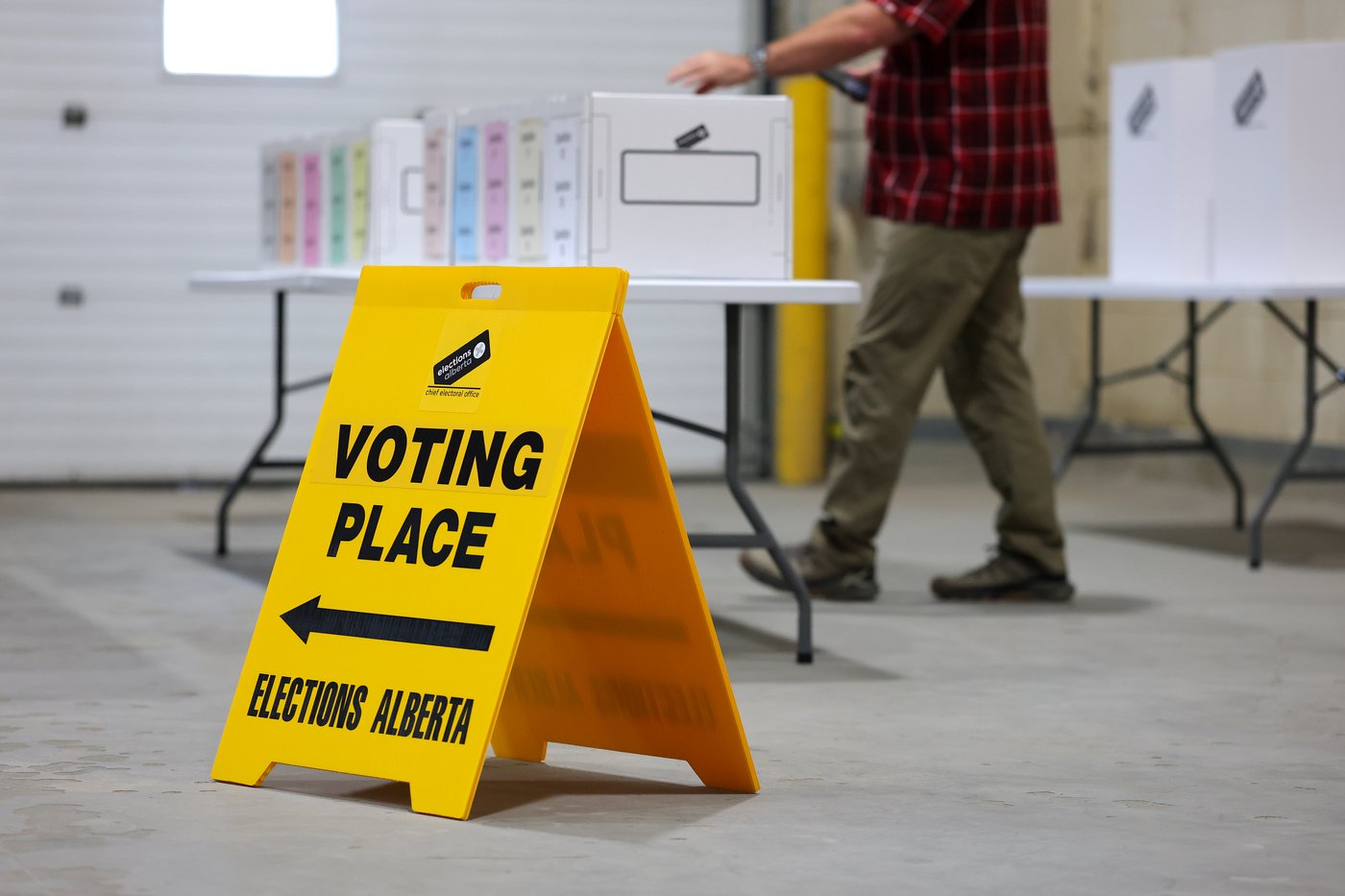
A voting sign to be used for the 2026 Alberta Referendum in Edmonton, Alta., on Thursday, Sept. 3, 2026. THE CANADIAN PRESS/James Maclennan

Elections Alberta ‘ready to deliver’ as advanced referendum polls to open this week

Oct 11, 2026 | 6:00 AM

EDMONTON — Albertans can start trekking to the polls this week to have their say on whether it’s time to look at quitting Confederation.

Advanced polls for the Oct. 19 referendum are set to open Tuesday, and if requests for mail-in ballots are any indication, there could be a record turnout.

Officials at Elections Alberta say they’re ready.

“We’ve completed scenario planning, and our teams are prepared to handle any issue that may emerge,” Maia Hanrahan, a spokesperson for Elections Alberta, said this week.

“We are ready to deliver.”

The agency has said for months that Premier Danielle Smith’s Oct. 19 referendum, with a headlining question on whether Albertans want to stay in Canada, will be a herculean task.

About 45 million printed ballots are required, as are at least 60,000 workers to facilitate the process and hand count the votes — a requirement the agency says will mean results likely won’t be known until the early morning hours on Oct. 20.

As of Friday morning, Hanrahan said, about 44,000 people have been hired and that recruitment efforts will continue right up until voting day.

“We’ve had a strong response from Albertans; and we’re grateful to them,” Hanrahan said.

Elections Alberta has also said it’s preparing for a record voter turnout of about 85 per cent. That level of voter interest was made evident when roughly 658,000 mail-in ballots were requested last month, representing roughly 20 per cent of the province’s approximately three million registered voters.

Hanrahan said that as of Friday, the agency has received just over 300,000 completed mail-in ballots ahead of the Friday deadline for returning them.

The unprecedented demand for mail-in ballots wasn’t without hiccups.

About 300 voters who were among the first to receive their packages in the mail opened their envelope to some of the 10 questions missing, an issue Elections Alberta said was the fault of its service provider and was remedied by sending new ballots in the mail.

Other voters in the early weeks of the special ballot period reported concerns with a form that required people to declare they were voting by mail because they were unable to vote in-person. The form threatened hefty fines for misuse of the process.

Elections Alberta said the form was old, as the government had changed the rules to no longer require a reason for Albertans to vote by mail. It advised voters to simply cross out that form and complete the rest of the declaration process.

Earlier this week, the agency also reported that some 3,000 mail-in ballots had been mailed back with missing documentation, such as proof of ID, or issues with the declaration forms. It said it was contacting each voter to remedy their situation so that their ballots could be counted.

The premier told reporters this week that Elections Alberta’s ability to work with voters to fix their mistake is a sign the agency is managing the referendum process well.

Smith has faced criticism from the Opposition NDP for underfunding the electoral system, and setting Elections Alberta up to fail with her massive referendum.

She conceded Wednesday that there “may be issues” that need to be dealt with after the vote.

“I’m sure that Elections Alberta will have its own report on how things went and to see if there’s any modifications that need to be made to the process,” she said.

Tuesday is set to mark the first of five days of advanced in-person voting for the referendum.

There will be 310 advanced polling stations across the province, and voters must go to stations within their electoral divisions.

On referendum day, there will be just over 1,400 polling stations.

Hanrahan said the agency is encouraging voters to go to advanced polls if they’re concerned about long lines on Oct. 19.

It’s also encouraging Albertans to familiarize themselves with the questions before they go to vote.

There are five questions Smith has put forward on immigration reform, and whether temporary workers and residents should be charged fees to access social services such as health care and education.

There are also four questions related to Canada’s Constitution that Smith wants a mandate for to lobby her provincial counterparts across the country.

The 10th question is whether Albertans want to remain in Canada or hold a second, binding vote on quitting Confederation.

Elections Alberta modelling indicates that voters who show up knowing how they plan to mark their ballots could still spend about two minutes in the voting booth.

Those unfamiliar with the questions could spend up to four minutes, Hanrahan said, while others whose first language is not English, have lower literacy skills or are slower readers could spend nearly six minutes in the booth.

“Electors are all different in their voting approach,” she said.

“The length of time it will take an elector to mark their ballot may depend on different factors, and the above numbers are approximates based on our modelling.”

There is no time limit on how long a person can spend filling out their ballots.

Hanrahan also asked voters to remember election workers are their friends and neighbours.

“Please be kind,” she said, adding that election officials will be on hand to answer questions voters may have.

This report by The Canadian Press was first published Oct. 11, 2026.

Jack Farrell, The Canadian Press