SUBSCRIBE! Sign up for our daily newsletter and never miss a story!

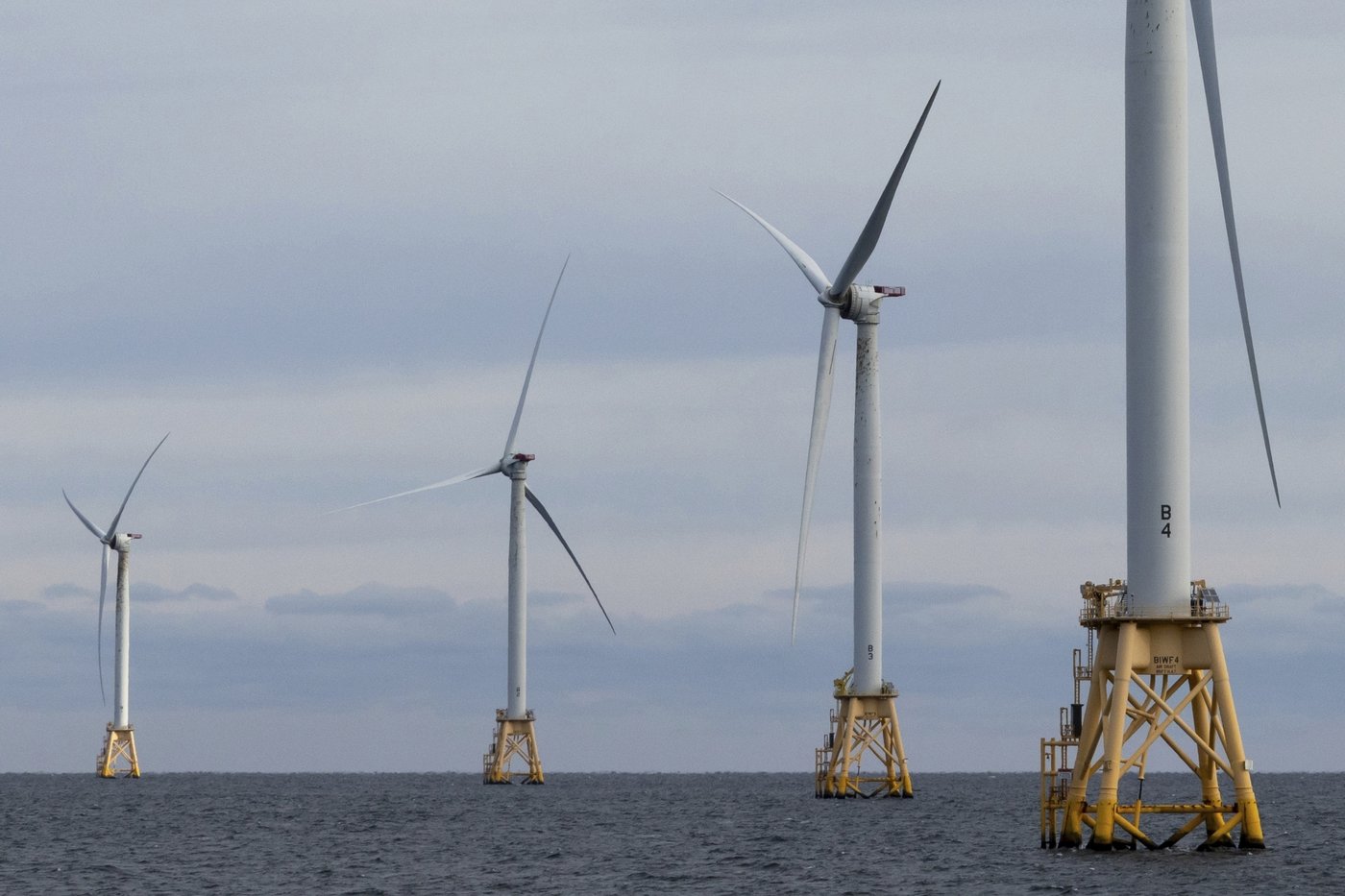
Turbines operate at the Block Island Wind Farm, Dec. 7, 2023, off the coast of Block Island, R.I. THE CANADIAN PRESS/AP-Julia Nikhinson

Ottawa announces $100 million toward Nova Scotia offshore wind project

Oct 15, 2026 | 2:00 AM

DARTMOUTH — The federal government is committing $100-million toward development of a Nova Scotia offshore wind energy project with the potential to power homes and businesses in Quebec, Ontario and New England.

Federal Energy Minister Tim Hodgson was bundled in a winter jacket and kept a tight grip on his speaking notes Thursday as a blustery Atlantic gale howled during his outdoor announcement for Wind West, which could become Canada’s first offshore wind project.

If approved, the $60-billion first phase of the project could generate five gigawatts of electricity as early as 2033, well above the 2.4 gigawatts Nova Scotia needs to supply the entire province.

“Even at this level of ambition, the project could provide electricity for up to 1.5 million homes here in Canada,” Hodgson said during a news conference on a wharf on the east side of Halifax harbour.

”That’s three times the number of homes in Nova Scotia and creates an incredible export opportunity for Nova Scotian Power.”


About $5 million in federal funding will be used to deploy a network of floating light detection and ranging buoys to measure offshore wind speeds and ocean conditions. Another $3 million will help expand modelling to include plans for transmission lines to Quebec and Ontario, as well as underwater surveys for possible cable routing.

Hodgson said the remainder of the money will go toward subsea drilling over the next year to provide information about sea floor conditions.

“If we do this upfront and make it available to all the potential bidders, it’ll improve their knowledge of the subsea and what it will cost and so we’ll get better bids,” the minister said.

Nova Scotia Premier Tim Houston, who has long called on Ottawa to help cover the costs of Wind West, said the funding shaves at least a year off development timelines and should give potential developers more confidence.

Provincial officials have said Wind West could generate 60 gigawatts of electricity if all phases are built. About $40 billion of the five-gigawatt first phase is earmarked for turbine infrastructure, with another $20 billion targeted for transmission projects.

“Before people start writing cheques for billions of dollars, they need more concrete data and we’re going to go and get that and share that with them,” the premier said.

Houston has said the excess electricity generated could be used to supply 27 per cent of Canada’s total demand. Quebec and Massachusetts have already shown interest in buying electricity from the proposed project.

Wind West is part of the Atlantic Energy Strategy, which has been referred to Ottawa’s Major Projects Office.

Hodgson said Thursday that the federal government thinks of Atlantic Canada as one energy ecosystem, and it’s working to establish a single electricity system operator for the Maritimes.

That could allow high voltage transmission lines to connect Quebec and Prince Edward Island with Nova Scotia’s offshore energy project, as well as New Brunswick wind and nuclear power, and hydroelectricity from Newfoundland and Labrador.

“It lets the provinces share those renewable resources so we don’t have to overbuild in each individual province,” the minister said. “It lets each province take advantage of the particular natural resources they’re blessed with and share them across the region.”

The federal government has said more than 80 per cent of Canada’s electricity already comes from renewables — such as solar, hydro, nuclear and wind power — but Ottawa has faced criticism from environmental groups over its decision to give priority to to conventional oil and gas projects.

For example, Ottawa’s electricity strategy unveiled in May aims to double Canada’s grid capacity, a key component of which would be leveraging a build out of natural gas.

Clean Energy Canada, a think tank at Simon Fraser University in British Columbia, said at the time the strategy “overstates the role of natural gas and understates the long-term energy security and affordability benefits of clean energy.”

This report by The Canadian Press was first published Oct. 15, 2026.

— With files from Nick Murray in Ottawa.

Devin Stevens, The Canadian Press