SUBSCRIBE! Sign up for our daily newsletter and never miss a story!

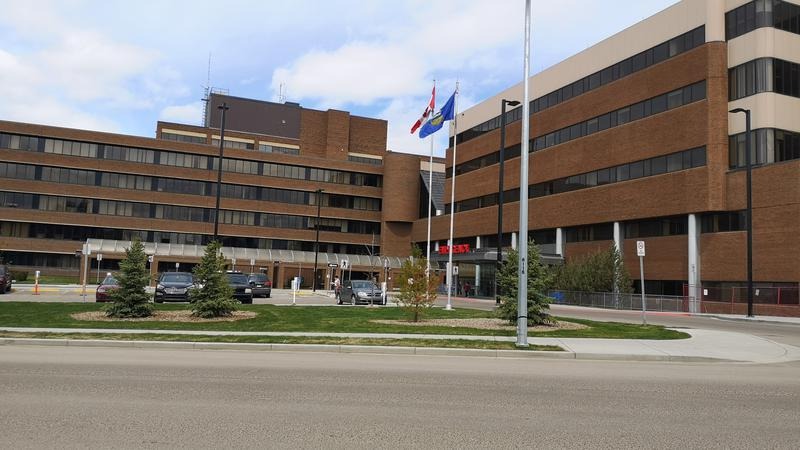
(Image Credit: File Photo/CHAT News)
Health Care

New breast cancer surgery technology introduced at Medicine Hat Regional Hospital

Oct 14, 2026 | 9:15 AM

Medicine Hat Regional Hospital now has new technology designed to improve precision in breast cancer surgery.

This will allow surgeons another option for treating patients in southeastern Alberta.

The Medicine Hat Health Foundation announced on Wednesday that the Sentimag Magnetic Localization System and Magseed technology are now in use at the hospital.

The first surgeries using the technology were completed successfully on Aug. 28.

The system is designed to help surgeons locate breast lesions that cannot be felt during a physical examination, allowing for more targeted removal of cancerous tissue and potentially reducing complications and the need for additional surgeries.

A new Trident HD Imaging Unit in the hospital’s Diagnostic Imaging department is being introduced alongside the technology.

“The Trident HD Imaging Unit can be used to help in the detection of lymph nodes and breast cancer by allowing tissue removed during surgery to be imaged in the operating room (OR),” Medicine Hat Regional Hospital general radiology supervisor Lynzee Marsh said in a news release.

“This helps the surgeon quickly confirm during surgery that the cancerous tissue and the Magseed have been successfully removed.”

The Sentimag system uses magnetic technology to help surgeons locate targeted tissue.

Magseed is a small magnetic marker that can be inserted into a breast lesion before surgery, and Magtrace is a magnetic tracer used in sentinel lymph node procedures.

The technology offers an alternative to traditional wire localization, which typically requires a wire to be inserted on the day of surgery.

Dr. Alisha Tessier, the surgeon who led the implementation of Magseed technology at the hospital, said the traditional approach can create scheduling challenges for patients and health-care teams.

“Historically, the localization of non-palpable breast lesions for surgical planning has been done with wire insertion. In some circumstances, localization requirements can create scheduling and workflow challenges for both patients and care teams,” Tessier said in a news release.

“Wire localization can limit the number of cases that can be done on any given day as patients must have the wire inserted on the day of surgery. In contrast, Magseeds can be inserted days, or even weeks, in advance, providing greater scheduling flexibility for the patient.”

A localization case with sentinel lymph node biopsy was the first operating room (OR) case completed on Aug. 28, 2026.

Tessier said this demonstrates the flexibility this technology can provide for patient scheduling and surgical planning.

“This optimizes timeliness of surgical care for oncology patients, as well as allowing for better OR efficiency. It improves access to General Surgical care for all patients, not only oncology patients, and allows more patients to have surgical care in their home environment and with appropriate family and friend support,” Tessier said.

The foundation said the technology is part of a broader effort to expand breast health services in the region, with a focus on women’s health beyond breast cancer alone.

At its 30th anniversary celebration in April, the foundation announced the creation of a comprehensive pilot Breast Health Program at Medicine Hat Regional Hospital, made possible through support from the Yuill Family Foundation.

The foundation also launched a campaign to purchase Magseed technology for use with the program in the hospital’s Women’s Health Clinic.

The foundation said Medicine Hat has some of the highest rates of breast cancer in Southern Alberta, second only to cardiac-related health issues, underscoring the need for continued investment in regional health services.

The introduction of Sentimag and Magseed is something the foundation said reflects wider efforts to expand the tools available to clinical teams across Alberta.

The foundation also noted that established localization methods remain safe, effective and clinically appropriate, and that Magseed provides an additional option rather than replacing existing approaches.