SUBSCRIBE! Sign up for our daily newsletter and never miss a story!

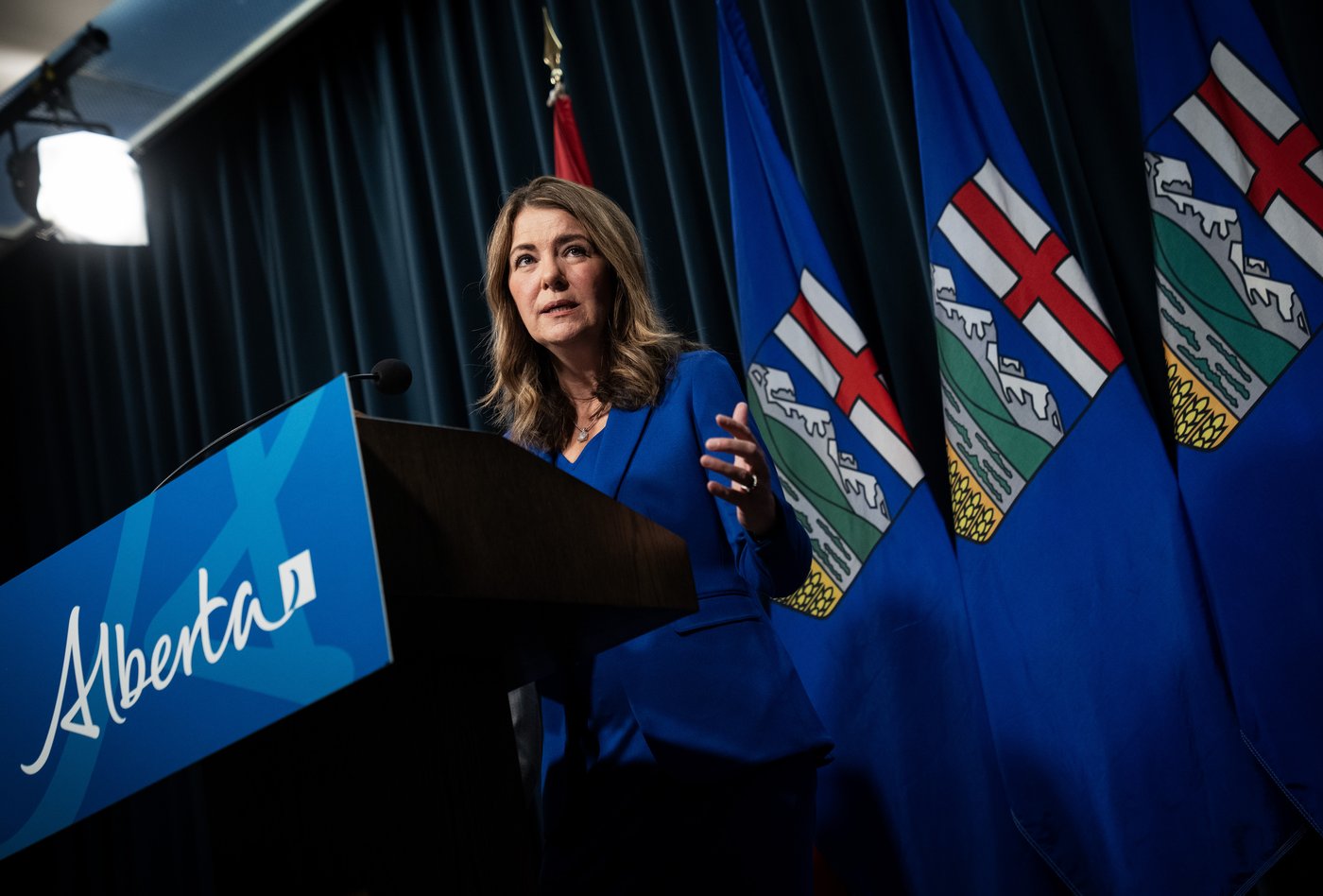
Alberta Premier Danielle Smith answers questions at a news conference in Calgary, on Friday, Feb. 20, 2026. THE CANADIAN PRESS/Todd Korol

Alberta’s Smith casts vote to stay in Canada, urges support for other nine questions

Oct 14, 2026 | 3:44 PM

EDMONTON — Alberta Premier Danielle Smith says she has officially marked her ballot in the province’s separation referendum — and it’s a vote for a united Canada.

“We have seen great progress lately in addressing the unfair laws and policies that have hurt Alberta,” Smith said in a video posted Wednesday to social media announcing she had voted earlier in the day.

She said she knows many Albertans are frustrated with the federal government, but said the province is starting to see headway with major projects, including a proposed new oil pipeline to the B.C. coast.

Smith encouraged fellow Albertans to vote to stay. She has long said she would vote for the province to remain in Confederation.

“Canada can still work,” she said. “We just need to make some changes.”

Monday is the official polling day but advance polls are open this week.

Smith has put 10 questions on the ballot, including one that asks whether Albertans want to stay in Canada or hold a second, binding referendum on quitting Confederation.

The other nine questions deal with proposals Smith has put forward for immigration and constitutional reform. Her government seeks approval from Albertans to seek more control over immigration, along with new rules and fees for newcomers.

They also seek approval from Albertans to pursue working with other provinces to change the Constitution and devolve more power to provinces.

Smith again urged Albertans to vote yes to those nine questions.

“Voting yes to questions one through nine is how we send a message to Ottawa that provinces need more autonomy and respect if Canada is going to be stronger and unified,” she said.

Advance voting began Tuesday and ends Saturday. Elections Alberta said the first day was a busy one, with close to 175,000 voters trekking to the polls.

Opposition NDP Leader Naheed Nenshi was among those who voted Tuesday. He encouraged Albertans to reject the United Conservative Party government’s nine proposals and vote to stay in Canada.

Michelle Gurney, a spokesperson for the agency, said Tuesday’s turnout was higher than the daily average of nearly 152,000 people seen during the advance voting period in the 2023 provincial election.

Gurney said a few advance polling stations stayed open late Tuesday to accommodate those who were in line before 8 p.m., including one that kept the lights on for three hours after it was supposed to close.

Technology issues at 17 polling stations meant some also stayed late to make up for delayed openings.

Issues also came up Wednesday, when severe winds caused afternoon power outages at two rural polling stations north of Edmonton.

Elections Alberta has said it’s expecting record voter turnout for the referendum, and it saw unprecedented interest in mail-in ballot requests last month.

Gurney said Wednesday that nearly two thirds of the roughly 658,000 special ballots requested have now been returned ahead of Friday’s 5 p.m. deadline.

Polls have suggested a strong majority of Albertans want to remain in Canada, but the debate has at times been acrimonious, dividing families and neighbours.

In Coutts — a tiny village on the U.S. border that became ground zero in the anti-government COVID-19 protests — the sign wars rage.

Several pro-Canada signs and Canadian flags were present on many people’s lawns Wednesday, counterweight to an equal number of signs urging Alberta to move on from Confederation.

One home proudly had a Republic of Alberta flag beside a Montana state flag.

Coutts made headlines in early 2022 as part of the broader “Freedom Convoy” movement that erupted across Canada in protest of COVID-19 vaccine mandates and public health restrictions. Trucks and vehicles blocked the U.S. access point for two weeks, tying up traffic and disrupting trade.

Former Alberta premier Jason Kenney has said that after the pandemic, the protesters’ focus morphed into separatism.

Jim Willett, 78, the mayor of Coutts during the trucker blockade, agrees.

“They just changed flags. Separationists that are local are the ones that buy into the conspiracy theories and all of that,” said Willett, who sports a Forever Canadian lawn sign and two Canadian flags in his front yard.

Willett, who grew up in Texas, said he understands the feeling of alienation.

“I know what it’s like to live in an area where you were a Texan first and you were an American second,” he said. “You didn’t like being told what you had to do and I can understand it here.”

Scott MacCumber, the current mayor of Coutts, declined a request for an interview.

William Harty, 72, has operated the Double Tree Motel in the village for a quarter century, and said he supports the decision to hold a vote. But he said he doesn’t support Alberta leaving Canada.

“I believe it’s a good deal to send a message, but I want to stay in Canada,” he said.

“If we separate, (U.S. President Donald) Trump may come in and take us over.”

He said having the vote might be what’s needed to get Ottawa’s attention.

“They’re getting a lot more money out of Alberta,” he said.

“Be a little more fair.”

This report by The Canadian Press was first published Oct. 14, 2026.

— With files from Bill Graveland in Coutts

Jack Farrell, The Canadian Press