SUBSCRIBE! Sign up for our daily newsletter and never miss a story!

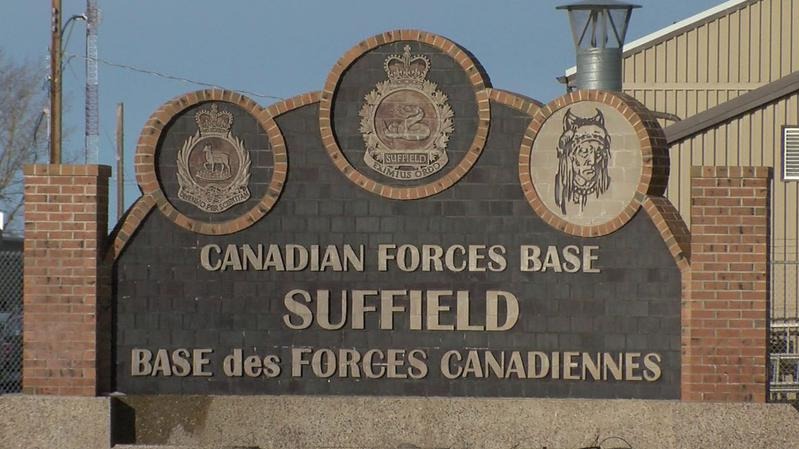
(Image Credit: File Photo/CHAT News)
Restructuring

CFB Suffield sees command change as Army prepares for modernization

Sep 16, 2026 | 10:41 AM

A major restructuring of the Canadian Army will change the command relationship for Canadian Forces Base Suffield. However, the base’s day-to-day operations and mission are expected to remain largely unchanged, according to its commander.

Lt.-Col. Turmel Chiasson says the changes, which took effect Sept. 10, moved CFB Suffield from the command of 3rd Canadian Division to the Canadian Army Support Division, headquartered in Kingston, Ont.

The former 3rd Canadian Division Support Group, based in Edmonton, has also been renamed the Canadian Army Support Group West.

“For CFB Suffield, there’s no expected change from day-to-day operations or the service we provide,” Chiasson said.

“The command relationship changed, but not our mission.”

Chiasson said the base will continue supporting Canadian Army training and operations, as well as organizations operating at the sprawling military training area, including Defence Research and Development Canada and the British Army Training Unit Suffield.

Chiasson described the change as a way to create a more standardized and centralized approach to support across the Canadian Army.

He added that the changes represent a significant restructuring, even though the effects may not be immediately visible to the public.

He said the centralized structure will place maneuver units under a single division and is intended to improve the army’s ability to respond to future requirements.

The restructuring comes as the federal government also looks at expanding Canada’s defence co-operation with Ukraine, including a new agreement to produce millions of drones.

Prime Minister Mark Carney announced the drone initiative Thursday in Banff alongside Ukrainian President Volodymyr Zelenskyy during a two-day cabinet retreat.

The agreement will see Ukrainian drone companies partner with Canadian firms to develop the systems.

The federal government says one-third of the drones manufactured in Canada will be sent to Ukraine for use in its war with Russia.

Chiasson attended the announcement but said decisions about whether CFB Suffield would have a role in that particular initiative have not been made.

He said the base is nevertheless well positioned to support the army’s evolving training and modernization requirements.

Suffield covers about 2,700 square kilometres and includes controlled airspace and infrastructure that allows the military to test and employ capabilities at scale, he said.

“Suffield is a natural place to consider all those emerging capabilities, including drones,” Chiasson said.

He stressed, however, that there is currently no decision to designate Suffield as a specific drone testing or employment site.

Chiasson said his responsibility as base commander is to ensure the facility is ready to support whatever requirements are assigned by the Canadian Army.

“I want to see Suffield used to provide the greatest value for the Canadian Army,” Chiasson said.

Chiasson said his own military background includes work with drones during his service in Afghanistan and training.

Chiasson took command of CFB Suffield in June 2025 after serving as chief of staff with 33 Canadian Brigade Group, a reserve brigade headquartered in Ottawa. He has been at Suffield since June 20, 2025 and has about two years remaining in his posting.

The base has also seen changes in activity.

British Army use of Suffield declined beginning around the start of the COVID-19 pandemic, and Canadian Army activity has increased over the past year, Chiasson said.

Primary Reserve units have conducted courses at the base this summer, and Exercise Precise Response, a NATO exercise led by Defence Research and Development Canada, took place again this year.

Chiasson said activity involving British forces has also increased, but could not predict how the relationship or level of activity will develop.

The federal government’s increased focus on defence and military modernization could create additional requirements for bases such as Suffield.

For Chiasson, the priority is ensuring the base is prepared to support those requirements.

“Suffield has served Canada and its allies extremely well for decades,” Chiasson said.

“I think the greatest value is still to come because there’s more training, more testing and evaluation to be done here, especially with all the capabilities that we have.”

“As Canada rebuilds and modernizes its army, we’re well positioned to contribute. So our job is just to be ready.”