SUBSCRIBE! Sign up for our daily newsletter and never miss a story!

Medicine Hat mother, among many, waiting years for family disability support from province. Courtesy/Rebekah Klassen
HEALTH CARE

Medicine Hat mother among many waiting years for Alberta family disability support

Jan 26, 2025 | 4:53 PM

Rebekah Klassen is the mother of a child who has disabilities. She said that if her son is not receiving provincial support, he’s not receiving a community aid support worker.

READ: Government cuts $500K in funding to Alberta disability organization

“He’s not being included as much as he can be in society,” Klassen said.

Thousands of children and adults with disabilities are experiencing prolonged delays in getting the help they need under two provincial programs.

In the absence of publicly available government data related to the programs, Inclusion Alberta launched their own survey in the fall of 2024 to better understand recipients’ experience.

Inclusion Alberta is an advocacy organization that supports families and individuals to be fully integrated into community life.

The group said in a statement that they are most concerned for the families who rely on the community and connection that has been created with the programs.

The government of Alberta facilitates two programs to support families of individuals with disabilities: the Family Support for Children with Disabilities, and Persons with Developmental Disabilities.

Trish Bowman, chief executive officer of Inclusion Alberta, says that many families who’ve applied don’t hear back from the province for months, or years in some instances.

“When they ask for an update, they’re told that they’re in the queue and they cannot provide a timeline as to when they might hear back. So families have no idea how long they’ll wait,” she said.

“What we hear from families is often real desperation. I mean, these are critical years for their children and they know that. And often that’s just really critical developmental time that you don’t get back.”

Klassen said that her son is not developing relationships outside of school, because he has troubles that a care worker would be providing support for, to show him how to integrate into the community.

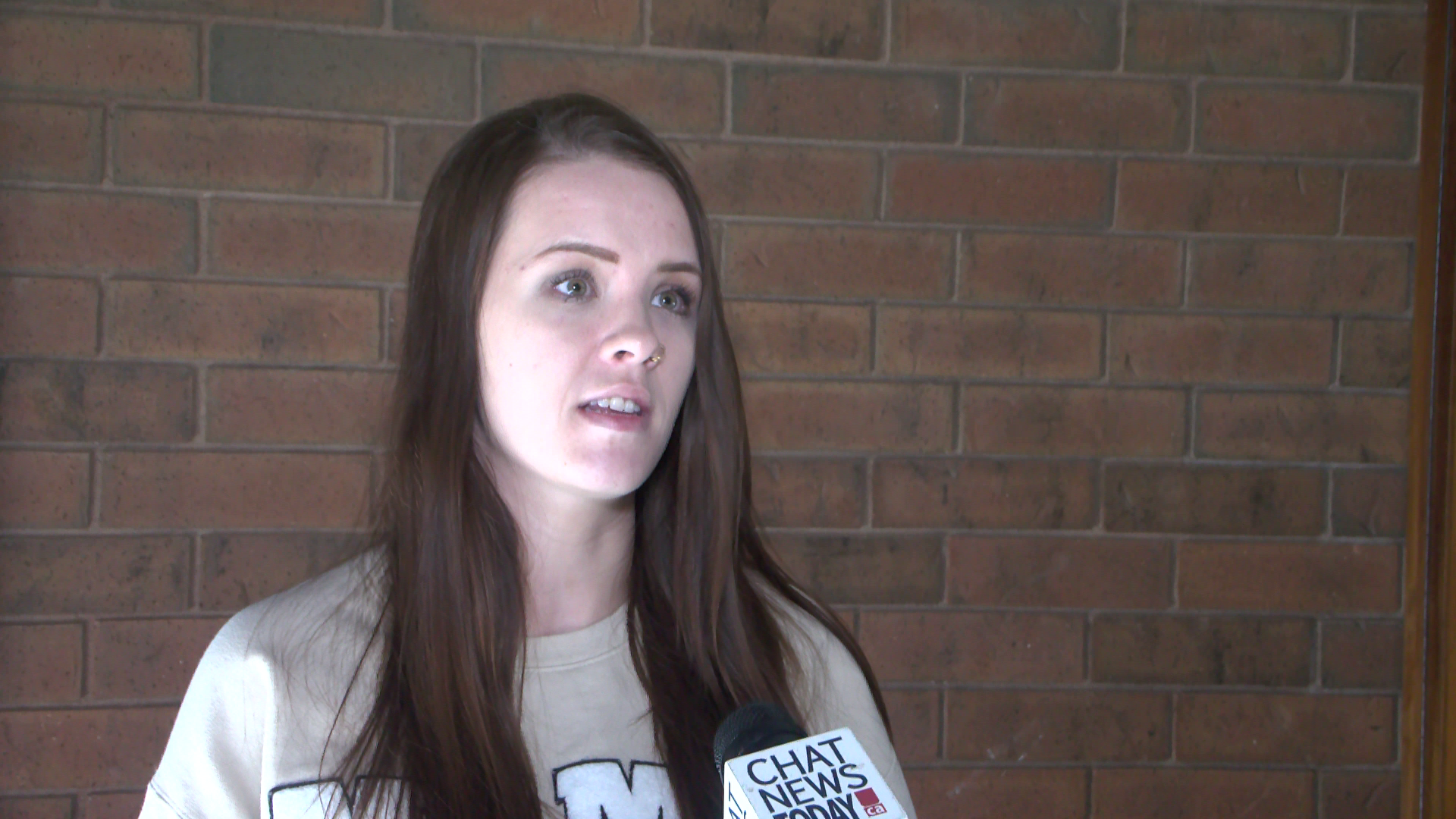
“He’s not being included as much as he can be in society,” said Rebekah Klassen, about her son with disabilities. Jayk Sterkenburg/CHAT News

“He’s not getting overnight respite. We are lucky enough to have hourly respite, so if I needed a break, because as a single mom we need breaks, I can’t go away because I don’t have the funding for 24-hour respite,” she said.

Klassen said that a big reason they moved to Alberta from Saskatchewan was the disability support program.

“A big part of that was the FSCD program because in Saskatchewan, kids with disabilities had no support. We had zero support in Saskatchewan,” she said.

“When we moved here, I knew that he was going to receive support in schools, and that there was respite available in this programming, and it was a very important part of my decision to move here,” she added.

“If I would have known that the wait list would have been two years, maybe that could have altered the change a little bit. But a lot of families move here because they desperately want support for their kids.”

Ashley Stevenson, press secretary for the ministry of Seniors, Community and Social Services with the province, said that the government recognizes that the demand for the FSCD program remains high.

“Alberta’s growing population, coupled with an increase in the prevalence of disability, has put increased pressure on this program to keep pace,” she said in a written statement to CHAT News.

She said that it’s important to note that the FSCD program was designed in a much different time.

“This is why the department is working to modernize this program to ensure it continues to work for Albertans now and in the future,” she said.

Bowman said that from April 2023 to April 2024, the case load grew by roughly 30 per cent for FSCD.

“There was no increase in the FSCD budget. So clearly there’s a strain, we have more families that need support and there is no capacity to respond to those families,” she said.

“Now families are waiting. And so that seems to have reached kind of a critical point in the last year.”