SUBSCRIBE! Sign up for our daily newsletter and never miss a story!

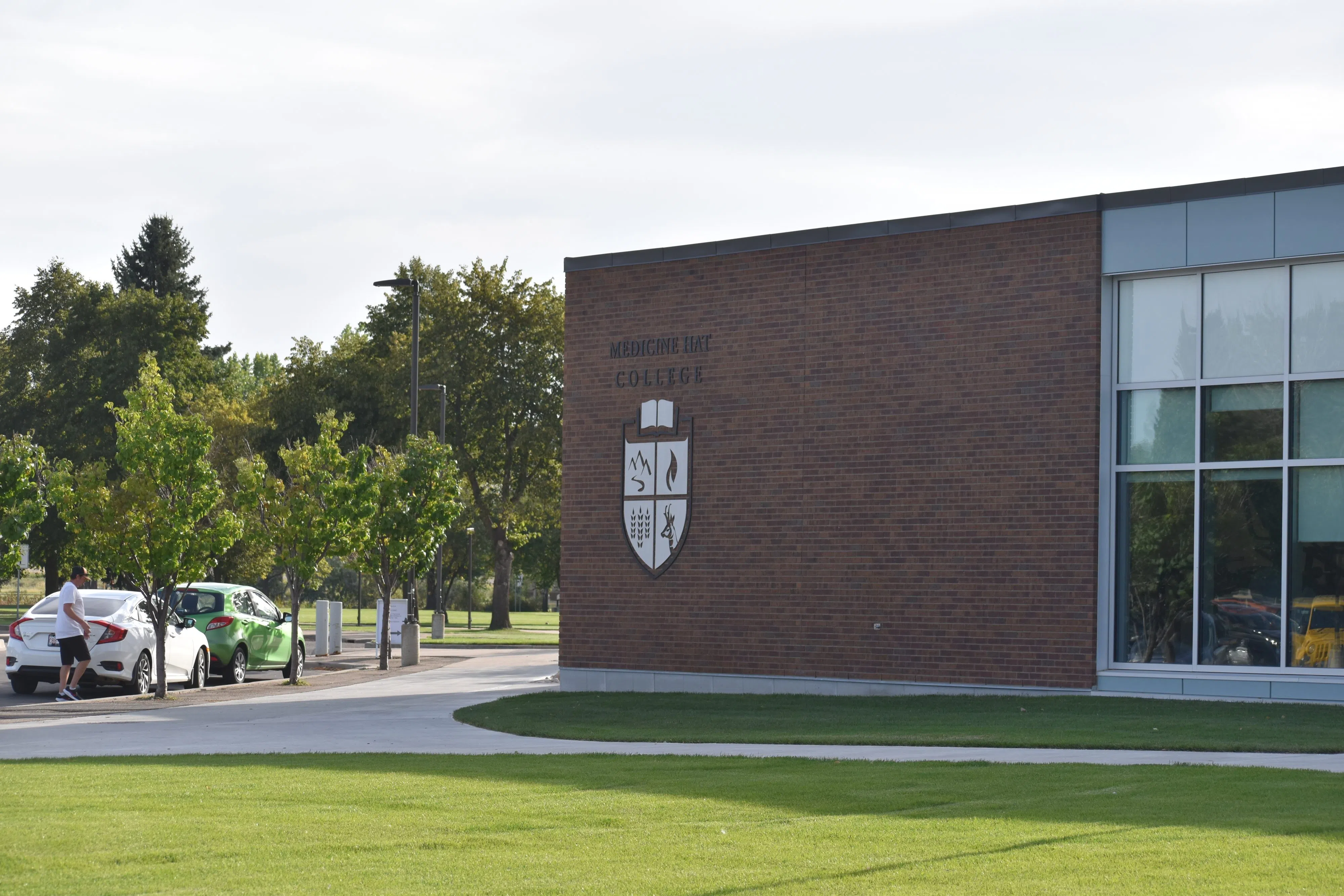
International students make up about 17 per cent of those enrolled at Medicine Hat College, officials say. Eli J. Ridder/CHAT News
EDUCATION

No layoffs this year at Medicine Hat College despite foreign student cap, president says

Apr 16, 2025 | 2:47 PM

Medicine Hat College isn’t planning layoffs this year despite the federal government’s cap on international student permits that has slashed a major revenue stream for post-secondary institutions across the country.

“We’re not going to be losing any full-time faculty positions this year,” college president Kevin Shufflebotham said Wednesday.

But, he explained, this year’s 80 per cent decline in applications that led to a drop in foreign learners on campus — and big chunk they pay in tuition — did cause a challenge for the college’s new $63-million budget approved this week.

The college’s answer to the decrease is to boost its offerings to attract more domestic students, according to Shufflebotham, who described it as “increasing access.”


The school is launching two new programs this fall, one for learning how to be a pharmacy technician and another for addiction counselling. The college is also researching how it can support dual-credit opportunities and it’s considering renovating academic spaces on campus, the president said.

Shufflebotham said that will actually result in the college hiring more professors to support the new programs.

The federal government last year announced a 35 per cent reduction in study permits, one of the first major reductions in Canada’s permanent and temporary immigration targets. For this year, the number of study permits will be further reduced by 10 per cent, with a maximum of 437,000 permits.

College registrar Sandy Henderson said the federal government’s decision to limit what fields of study are eligible for international students to get a work permit after graduation is also contributing to the shortfall.

“We’ve certainly seen an impact for future applications to Medicine Hat College. Some reductions for sure,” Henderson said.

International students only make up about 17 per cent of students at the college but, like most colleges, they bring in a significant amount in cash, often paying double or triple the tuition fees of their domestic peers.

For example, Medicine Hat College’s business administration diploma for all majors costs domestic students $6,175 in tuition and mandatory fees while international students pay $15,949, according to its estimates. For the kinesiology program, Canadians pay $7,094 and foreigners are charged $18,441.

Many post-secondary institutions are struggling to fill the gap left by the declining international tuition fees.

Lethbridge Polytechnic revealed it was cutting 53 permanent positions by June 30 through a mix of layoffs and early retirements after it experienced an $8-million shortfall driven largely by the international student cap.

Challenges caused by the permit cuts are being felt across the country.

The Council of Ontario Universities said its members, which include 20 of the province’s top universities, expect a combined loss of $330 million this fiscal year and $600 million in the upcoming fiscal year.

“We’re seeing across-the-board cuts in programming and services, layoffs, hiring freezes, deferred capital investments,” the organization’s president Steve Orsini said.

A report by Higher Education Strategy Associates said tuition from Indian students alone contributed more to funding Ontario’s post-secondary institutions than the provincial government.

Immigration Minister Marc Miller said the international student system was set up to attract talent to fill key roles in the labour market, but he had to make the cut because the program got “overheated.”

As for the funding challenges facing universities and colleges, Miller said that’s not the federal government’s problem.

— With files from The Canadian Press, Jesse Gill