SUBSCRIBE! Sign up for our daily newsletter and never miss a story!

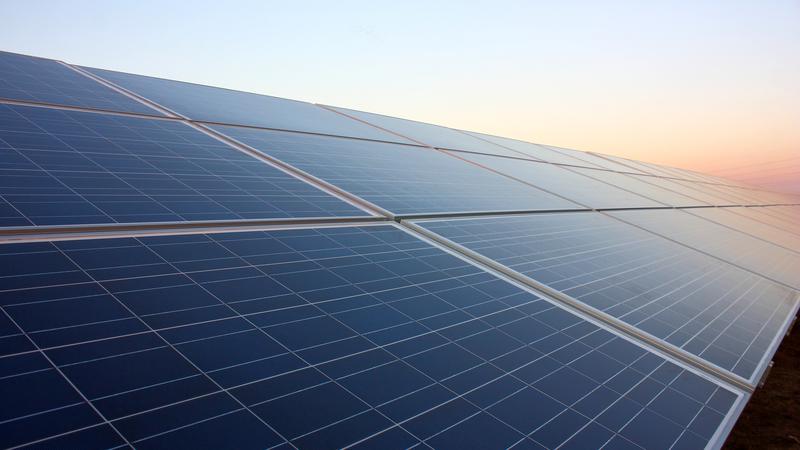
The City of Medicine Hat will carry out an analysis of the Saamis Solar Park project due back by the end of 2025. Stangot/Dreamstime.com
CITY HALL

Medicine Hat council approves $675K Saamis solar project analysis

Apr 7, 2025 | 11:30 PM

Funding to research the cost and impact of building Saamis Solar Park was approved by the majority of Medicine Hat’s city council Monday, pushing the project to the next stage.

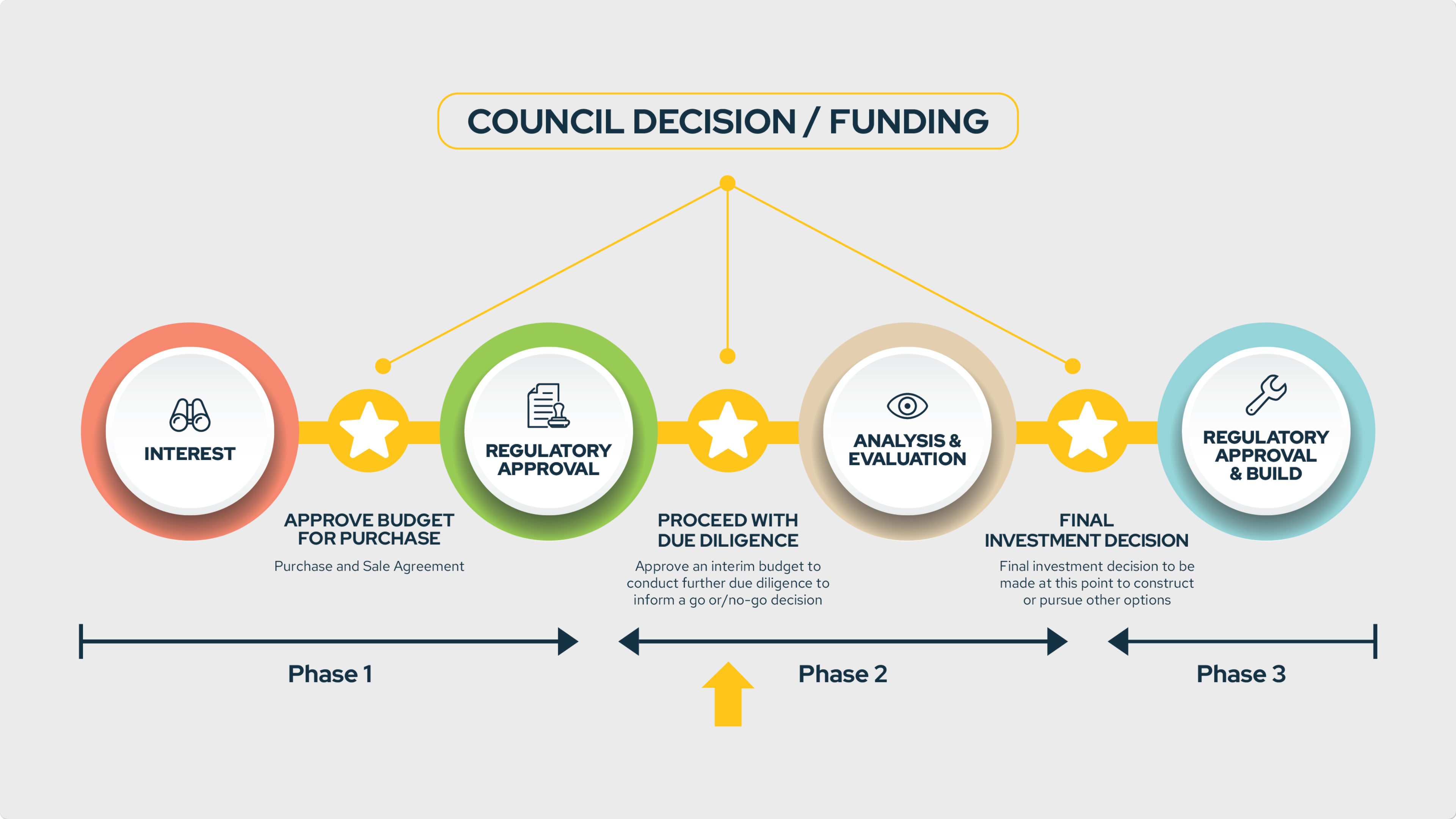
The energy division requested $675,000 to pay for third-party “due diligence” work staff say is required to find out if the project is viable.

Staff will return in the fourth quarter of 2025 with a recommendation based on the analysis.

Only councillors Shila Sharps and Andy McGrogan voted against the proposal. Coun. Darren Hirsch was not present.

Supplied/City of Medicine Hat

The next “stage-gate” requested Monday was always a planned part of the solar project’s timeline should it be built. The analysis phase includes a deep dive that couldn’t start until the city purchased the project.

The decision does not mean the city is locked in with building the project.

City energy director Travis Tuchscherer said the analysis will help narrow down a cost that will determine if staff recommend council move ahead on the project.

“The city completed preliminary due diligence prior to acquiring the project, and now that the city is the owner of the project, the next step would be to complete further due diligence,” Tuchscherer told council.

This next step of analysis would provide “a tighter plus or minus 10 per cent capital cost estimate,” he added.

Staff say having a solar farm would help meet the needs of the city’s current energy customers and attract new ones.

Coun. Allison Knodel asked what size of commercial customers are interested in green energy.

In response, Tuchscherer said Medicine Hat has been contacted “by some of our larger industrial and commercial customers in the city that would have fairly significant size consumption from this project.”

McGrogan and Mayor Linnsie Clark pushed Tuchscherer on what the cut off date would be regarding contractual timelines but, largely due to competitive privacy issues, he wasn’t able to reveal more information.

Staff did warn in its council report that there would be a financial cost to delaying the project.

Sounantha Boss, president of the Medicine Hat Utilities Ratepayer Association, was undeterred in her criticism of the solar farm.

“Our group is still very much opposed to this project,” Boss told reporters after council approved the research phase.

“Just so much information that we have acquired over the past six months has really just shown us that this city is not paying attention to what is going on, even in the province, around other jurisdictions and in the world.”

City staff say the ratepayer group’s own analysis of the solar farm’s validity is limited and may not be applicable, as MHURA does not have the same information the city just gained as owners.

“They’re not paying attention to the public. And the majority of the people in this community are saying ‘no, this is not what we want in our community,'” Boss said, without offering evidence.

“So, it’s really just very disappointing.”

Political consultant Jim Groom said after council Monday it’s a lot of cash for the city to do more research but it’s work better done than not.

“I would rather them do that now than to turn out with egg on their face because there’s no way that this is a viable program or something of that nature,” Groom told CHAT News.

Groom said Medicine Hat had to spend some money upfront to establish gas plants over 100 years ago, forming the basis for the city’s future and identity.

He argued that groups like MHURA can get set in their ways without having all the facts available to them.

“There are some groups that just want more attention rather than more solutions,” Groom said.

“They’d rather simply keep all their money in their pockets, as it were, and not realize that sometimes you need to spend money in order to make money.”

Coun. Robert Dumanowski said it was important for the Medicine Hat community to know the analysis leg was necessary to work out the specifics.

“I want to assure the public that this is a well-known step in the process that council, as your elected body, is moving forward,” Dumanowski said.

Sharps asked why the funding granted Monday wasn’t included in the last budget. Tuchscherer said that was because they were waiting on AUC approval of the purchase.

As for how it benefits the average taxpayer, Tuchsherer told Sharps a solar farm project has the potential to add value to the generation business.

Energy head Rochelle Pancoast said she couldn’t guarantee there wouldn’t be a tax rate increase if the solar farm project was built but emphasized the analysis would help answer that question.

Pancoast and other energy staff have insisted repeatedly they wouldn’t recommend Medicine Hat move ahead with the solar farm if it doesn’t make sense financially or for the city’s future.

Both Sharps and McGrogan said they would feel more comfortable if the solar farm project was being administered by a municipally controlled corporation.

Council is expected to consider creating such an arms-length corporation to manage its business portfolio later this year.

Pancoast said if the project moved ahead into construction, it would be later shuffled under the arms-length corporation.

The City of Medicine Hat will be required to carry out public consultation aspect will need to be carried out before any final decision is made.

The early cost estimate for a proposed 75-megawatt initial stage was about $120 million to $130 million.