SUBSCRIBE! Sign up for our daily newsletter and never miss a story!

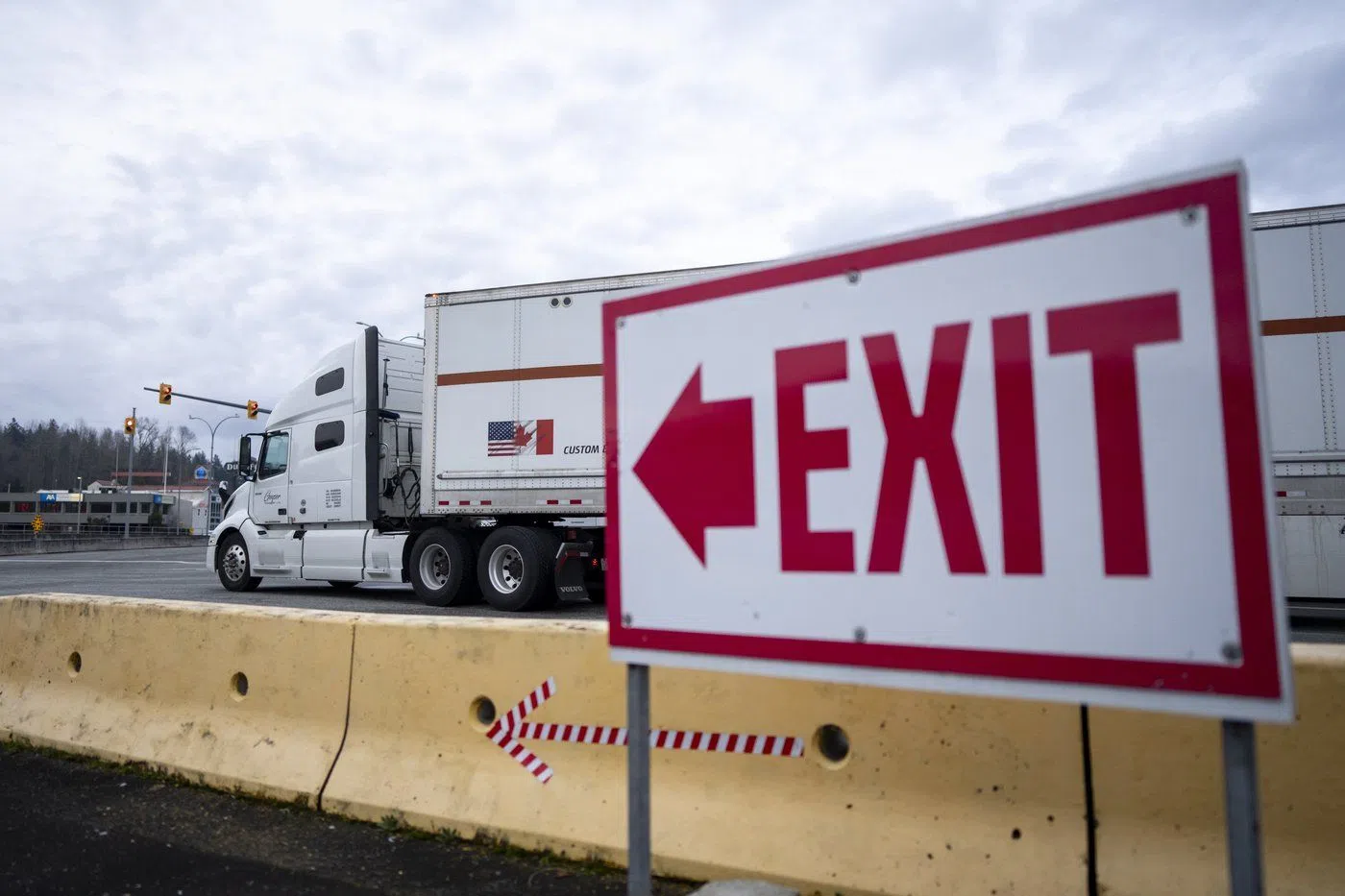
A truck waits to cross at the United States and Canada border in Surrey B.C., on Tuesday, March 4, 2025. THE CANADIAN PRESS/Ethan Cairns
WHAT TO KNOW

Here’s how Canada’s provinces are reacting to the U.S. tariffs

Mar 4, 2025 | 2:45 PM

Canada’s provincial governments are reacting today to tariffs imposed by U.S. President Donald Trump.

Premier Danielle Smith called Washington’s levies an “unjustifiable economic attack on Albertans and Canadians but did not announce any specific countermeasures.

“These tariffs will hurt the American people, driving up costs for fuel, food, vehicles, housing and many other products,” Smith said.

“They will also cost hundreds of thousands of American and Canadian jobs. This policy is both foolish and a failure in every regard.”


Smith said this is not how things should be between two of the world’s strongest trading allies and partners, adding that she would rather work with the U.S. on mutually beneficial trade deals than be caught in the middle of a trade war.

READ: Premier Smith slams U.S. tariffs as ‘foolish’

The premier says she will have “more to say” on Wednesday.

Meanwhile, here’s what other premiers have announced so far on Tuesday.

Ontario rips up Starlink deal

Ontario will ban American companies from $30 billion worth of procurement contracts, rip up a $100-million Starlink deal and eradicate U.S. booze in its first wave of retaliations against U.S. President Donald Trump’s tariffs, Premier Doug Ford said Tuesday.

Ford said he will also soon impose a 25 per cent surcharge on electricity that the province sends to 1.5 million Americans in several states, and has threatened to cut off power altogether if U.S. tariffs remain place into April.

He also threatened to surcharge or cut off critical mineral exports to the U.S. should the trade war linger.

“We also need to be ready to dig in for a long fight,” Ford said. “We need to be ready to escalate using every tool in our tool kit.”

Trump imposed tariffs of 25 per cent on Canadian goods and a lower 10 per cent levy on energy. The federal government has responded with a suite of retaliatory tariffs on U.S. goods.

The Liquor Control Board of Ontario, under direction from Ford, will stop buying and selling American alcohol immediately.

“We have to make sure we diversify and make sure that the provinces, municipalities, and the federal government buy Ontario and, secondly, buy Canadian if we can’t make it here in Ontario,” Ford said.

Ontario is uniquely positioned to quickly make U.S. alcohol scarce. The LCBO is the sole purchaser for all American alcohol across the province and imports $965 million worth of booze annually, with more than 3,600 American products from 36 states on its shelves.

The LCBO website was temporarily down on Tuesday while those products are being removed. At one downtown Toronto liquor store, staff cleared American whiskey, vodka and wine from the shelves and posted signs that read, “For the good of Ontario. For the good of Canada.”

The LCBO is also the province’s main alcohol distributor, which means grocery and convenience stores, bars and restaurants and other retailers will no longer be able to buy U.S. alcohol.

“Our in-store teams can help customers find alternative products from our extensive selection of products from Ontario, Canada, and around the world,” the LCBO said in a statement.

The premier said American companies will not be able to bid on the $30 billion worth of procurement contracts the province awards each year, or bid on contracts related to his $200-billion infrastructure plan to build highways, tunnels, transit, hospitals and jails.

“U.S.-based businesses will now lose out on tens of billions of dollars in revenues,” Ford said.

“They only have President Trump to blame.”

Ford said the province will rip up the $100-million deal it signed with Elon Musk’s SpaceX last year to provide high-speed Starlink internet to northern Ontario, rural and remote First Nation communities.

“It’s done, it’s gone,” Ford said.

“We won’t award contracts to people who enable and encourage economic attacks on our province, province and our country.”

Ford added that he wants to get rid of free trade barriers between provinces, speed up infrastructure and mineral extraction approvals and build oil and gas pipelines “east, west and north.”

Trump is targeting Ontario’s auto sector, saying he doesn’t want or need Canadian cars and would prefer they be made in Detroit.

Trump himself signed the most recent free trade deal with Canada and Mexico, saying in 2020 it was “the best and most important trade deal ever made by the USA.”

Now he wants to rip that deal up.

Ford said the tariffs will have a nearly immediate impact on automotive assembly plants on both sides of the border.

“The assembly lines in the auto sector will shut down within 10 days, I predict,” he said.

Ford tried to calm an anxious Canadian public, but said tough times are ahead.

“The coming days and weeks will be hard,” he said.

“Businesses and families will feel the pain of this needless fight, but together we’re going to stand up for Canada. We’re going to get through this more united than ever before.”

Manitoba pulls U.S. booze, offers tax deferrals to businesses in wake of tariffs

The Manitoba government offered tax deferrals to businesses in the province Tuesday and pulled United States products from liquor stores in response to the tariffs.

Businesses affected by the tariffs will have the option of deferring payments of both the provincial sales tax and the health and post-secondary education tax levy — commonly called the payroll tax — for at least three months.

“This will start with the February tax period and go for three months before we reassess. This allows businesses to keep cash and protect your jobs,” Premier Wab Kinew wrote on the X social media platform, formerly known as Twitter.

The payroll tax charges employers a percentage of their payroll. Businesses with payroll of less than $2.25 million a year are exempt.

The ban on U.S. liquor is expected to affect about six per cent of products sold by Crown-owned Manitoba Liquor and Lotteries, including 409 spirits, 341 wines and many beers and other products. The ban only applies to products made in the U.S., not to U.S.-based brands such as Budweiser that are brewed in Canada.

Kinew has hinted at other retaliatory measures, such as forbidding U.S. companies from bidding on Manitoba government contracts, but there was no word on that possibility Tuesday.

Keystone Agricultural Producers, a major agricultural group, says the U.S. tariffs will harm farmers and consumers on both sides of the border.

It said Manitoba’s agri-food exports were $9.28 billion last year, with 46 per cent going to the U.S.

“These tariffs will not only add costs and threaten Manitoba farmers’ ability to operate but will impact the livelihoods and purchasing power of countless individuals and businesses on both sides of the border, resulting in increased food costs for U.S. consumers,” the group’s general manager, Colin Hornby, said in a news release.

The Manitoba Chambers of Commerce said its members face a lot of uncertainty about the extent of the impact of the U.S. tariffs.

“Some of the companies that I’ve talked to do 70 to 80 per cent of their business south of the border,” chamber president Chuck Davidson said.

“How big of an impact is that going to be? Are those U.S. customers simply going to go away?”

B.C. pulls liquor, changes procurement after U.S. tariffs

British Columbia and the rest of the country is strong enough to weather the storm in the threat to Canada’s sovereignty coming from a former friend, B.C. Premier David Eby said.

Eby took the unusual step of interrupting B.C.’s budget lockup Tuesday, hours before the financial document was tabled in the legislature, to address how the province will respond after U.S. President Donald Trump imposed tariffs on Canadian goods.

He said B.C. will again be pulling liquor off store shelves from “red” Republican states and that the government will prioritize purchasing Canadian products first, with a focus on provincial products.

“This is something that we can’t do ordinarily because of trade agreements with the United States. We have to treat their products like ours when we’re purchasing as a government otherwise it’s a trade violation. Well, obviously, all bets are off,” he said.

Eby said his government will be working closely with Indigenous, business and labour leaders to accelerate major projects in the province, and there will be supports in place for businesses to move their services or products away from the United States to domestic and global markets.

He said the province’s response to Trump’s tariffs is a message to Americans that everything is going to cost more.

“Everything, from the cost of pasta, to the cost of a home or a car, or to turn on the lights, or to fill up a tank of gas is going to go up in a way that is noticeable and significant for American families,” he said.

Eby said American manufacturing jobs will be taken by people living in countries other than the United States who have access to the raw materials that Canada provides without tariffs.

Trump announced a 25 per cent U.S. tariff will be placed on Canadian goods, while Canadian energy will face 10 per cent tariffs.

Prime Minister Justin Trudeau said Tuesday that Canada will be going ahead with 25 per cent retaliatory tariffs.

The federal government says it will impose tariffs on $155 billion worth of American goods, with $30 billion being applied immediately and the remaining $125 billion landing in 21 days.

Trudeau said Canada also will challenge Trump’s actions by filing dispute resolution claims with the World Trade Organization and through the Canada-United States-Mexico Agreement.

Trump then responded to Trudeau’s remarks, threatening to introduce even more tariffs on Canada in a post on Truth Social, the social media platform he owns.

Trump wrote that if Canada puts retaliatory tariffs on the U.S., “our reciprocal tariff will immediately increase by a like amount!”

Eby said British Columbians should continue focusing on buying local or Canadian goods, and to avoid travel to the United States, if possible.

He said that while threats to Canadian sovereignty are “disgusting,” the silver lining is that the conflict has brought out a sense of pride and solidarity among all Canadians that has not been seen for a long time.

“We’re big enough to stand on our own two feet. This is a moment for us to take an attack, and turn it into a source of strength for ourselves as a province and as a country,” he said.

Eby’s government cancelled its election promise of a $1,000 grocery rebate and froze some public-sector hiring, in advance of what Eby has called economic warfare by Trump.

B.C. first pulled liquor from Republican states off the shelves last month, but temporarily reversed course when a 30-day reprieve from the U.S. threat of tariffs was negotiated.

While Trump’s order imposing the tariffs references national security concerns about drugs and illegal immigration at the Canadian border, in a post today on Truth Social he says that if companies move to the U.S. there will be no tariffs.

Saskatchewan’s Moe faces calls to hit back as punishing U.S. tariffs kick in

Saskatchewan Premier Scott Moe says U.S. President Donald Trump is “simply wrong” for imposing punishing tariffs on Canadian goods.

In a Tuesday statement, Moe said Americans are about to find out that Trump is wrong when he says the United States does not need Canadian products.

“American farmers need Canadian fuel and fertilizer to grow their crops,” he said. “Trump’s tariffs will drive up the cost of oil, potash and uranium, and that will drive up the cost of groceries for every American family.”

Trump has hit Canada with tariffs of 25 per cent on all goods, with a lower 10 per cent levy on energy.

Prime Minister Justin Trudeau said Canada is fighting back by slapping the U.S. with 25 per cent retaliatory tariffs on $30-billion worth of American products and would expand them to cover another $125 billion in 21 days.

Moe said Canada’s countermeasures need to be “economically sound and reasoned” and that Saskatchewan is considering how it will respond. Cabinet is to meet Wednesday to consider its options.

“As we have always done, our government will continue working to expand trade to other countries and expand trade within Canada by reducing interprovincial barriers and promoting the construction of necessary infrastructure, like pipelines,” said Moe.

Moe has faced calls to hit back on Trump’s tariffs.

Ontario Premier Doug Ford said Moe should consider no longer selling potash, oil and uranium to the United States in favour of other markets.

“We need to make sure America feels the pain,” he said.

Saskatchewan Opposition NDP Leader Carla Beck said Moe’s Saskatchewan Party government should pull American liquor from stores, a move other provinces are making.

“Today is a hard day and it’s one that we hoped wouldn’t come,” she told reporters. “But now that it’s here, we must act.

“Families and businesses right across this province are scared right now. They deserve to know that their government and their leaders have their back and that they’re doing everything possible to support them.”

Saskatchewan exported $26-billion of goods to the U.S. in 2023, with potash and oil among its major exports. Agriculture products represent about 22 per cent of the province’s total exports to the U.S.

Moe has said tariffs would result in job losses in both countries and that Canadians would lose if the two countries become mired in a trade war.

Bill Prybylski, president of the Agricultural Producers Association of Saskatchewan, said the tariffs are disappointing and create uncertainty in the sector.

He said commodity prices may fall, resulting in farmers getting less for their grain. On the flip side, costs for crop inputs — like fertilizers and machinery — are likely to go up.

While countermeasures will also hurt, Prybylski said they’re necessary.

“We’re hoping once consumers and producers on both sides of the border start feeling the effects of the tariffs that they’ll be putting enough pressure on their elected officials to try and get a settlement sooner than later,” he said.

Nutrien Ltd., the world’s largest potash producer with its headquarters in Saskatoon, said in a statement it has been working with representatives in both countries to promote free trade.

More than 80 per cent of potash used by American farmers comes from Canada, it added.

“While we will continue to serve our U.S. customers, the cost of tariffs would ultimately be borne by U.S. farmers,” the company said.

“In anticipation of tariffs, we’ve moved as much potash south of the border as possible ahead of the spring planting season.”

Atlantic premiers take aim at U.S. President Donald Trump’s ‘short-sighted’ tariffs

Nova Scotia Premier Tim Houston is calling U.S. President Donald Trump a “short-sighted man” for imposing a 25 per cent tariff on Canadian goods.

Houston issued a statement today saying Trump is wielding power for the sake of it, and the premier said his Progressive Conservative government will respond by immediately barring American businesses from bidding on provincial contracts.

The premier said he is also looking into cancelling existing contracts with U.S. firms.

“It is impossible to properly describe the uncertainty and chaos that President Trump’s threat of tariffs and now actually imposing tariffs has caused for Canadians,” Houston said.

“We know tariffs are bad for people and businesses on both sides of the border. Unfortunately, some people need to touch the hot stove to learn, and while we cannot control or predict their behaviour, we can control how we respond.”

Houston said the Nova Scotia Liquor Corp. is removing all U.S. alcohol from its shelves, and the government will double the tolls at the Cobequid Pass for American commercial vehicles travelling that stretch of northern highway that connects the province with New Brunswick.

The Nova Scotia government is also working on a trade action plan to help businesses export internationally, beyond the U.S.

In New Brunswick, Premier Susan Holt said Trump’s “illegal, unjustified” tariffs will have a big impact in the province, where 92 per cent of exports go to the United States.

“These tariffs are an attack on Canada and on who we are, and they mark a turning point for our province and our country,” Holt said.

The New Brunswick government has already stopped buying American products and it is working to lift inter-provincial trade barriers, the premier said.

Luke Randall, the minister responsible for Opportunities NB, announced financial support to help large, export-focused companies maintain jobs and diversify their markets. The department will also offer loans of up to $5 million to companies hit hard by the tariffs.

“We know there remains a lot of uncertainty in New Brunswick, across Canada and globally, but I’m here to tell you that we are ready, and we have your back,” Randall said.

About half of New Brunswick’s exports to the U.S. are refined petroleum products from the Irving Oil refinery in Saint John — the largest refinery in Canada.

The non-profit Atlantica Centre for Energy says 80 per cent of the vehicles in New England fill up with fuel refined in Canada. As well, New Brunswick’s Crown-owned electric utility, NB Power, has long been the primary source of electricity for northern Maine, which is not directly connected to the U.S. electricity grid.

The centre says that every year, New England imports $10.2 billion worth of fuel oil, natural gas and electricity from Canada. The centre represents Irving Oil, NB Power, Nova Scotia Power, Maritimes and Northeast Pipeline, and several other energy-related businesses and organizations.

In Newfoundland and Labrador, Premier Andrew Furey described Trump as a “bully.”

Furey issued a statement saying the relationship between his province and the United States has been “unlawfully and unjustly harmed.” And he said American products would be removed from the shelves of the Newfoundland and Labrador Liquor Corporation.

Furey also pledged to expand the province’s export markets in Europe and beyond, and he called on residents to buy Canadian-made products.

“We stand with Team Canada as we stand strong, together,” he said. “Our identity, our values and our sovereignty will give us the strength to stand against any bully.”

Meanwhile, the Nova Scotia Federation of Labour said the U.S. tariffs represent an unprecedented challenge to province’s workforce.

Federation president Danny Cavanagh issued a statement saying Nova Scotia has thousands of workers employed in export-oriented industries, the key ones being lumber, seafood, Christmas trees, paper products and tires from three Michelin plants.

Those industries now face a severe competitive disadvantage in the U.S. market, he said.

“These tariffs are not just numbers on paper; they represent an immediate threat to the livelihoods of thousands of Nova Scotian workers and their families,” Cavanagh said.

Cavanagh wants the Nova Scotia government to establish a tariff response committee with representatives from labour unions, Indigenous communities, affected industries and communities.

The federation is also calling for: employment insurance extensions; targeted support programs for vulnerable exporters; investment in worker retraining programs; and provincial subsidies to help employers maintain jobs if there is a prolonged economic downturn.

“This is not just about trade policy, it’s about families’ ability to pay rent, put food on the table, and survive this economic shock,” Cavanagh said.

Yukon stops orders of U.S. alcohol after tariffs

Yukon is no longer placing orders for U.S.-made alcohol and is removing American products from for all government liquor stores in response to U.S. President Donald Trump’s tariffs on Canadian goods.

A statement from Premier Ranj Pillai says businesses may continue to sell the American-made products they already have in stock, but no new orders for U.S. alcohol will be placed by the territory’s distributor, the Yukon Liquor Corporation.

Pillai says the 25 per cent tariffs on Canadian goods by the United States are “unjustified and short-sighted” and his government is updated its procurement policies to encourage the purchase of more goods and services from local businesses and non-U. S. companies.

He says the territory is spending $1 million to develop an assistance program, complementary to federal support programs, to help Yukon businesses adapt to the uncertain economic environment created by the tariffs.

He says the territory is developing a second round of responses to tariffs if the Trump administration continues “down this destructive path” and that more details will be provided in the days and weeks to come.

Pillai says the United States is Yukon’s most important trading partner, and Canada’s closest friend and ally, “but this is not how you treat your friends.”

“To our friends and family in Alaska: our lives and economies are interconnected, and we hope you will continue to visit our territory and experience all that it has to offer. Please know these measures are not directed at you, but we must do what we can to stand up for our country, our sovereignty and our way of life,” he says.

The Yukon is the latest Canadian jurisdiction to include alcohol as part of its response to Trump’s tariffs.

Manitoba, Ontario, Quebec, Nova Scotia, New Brunswick, P.E.I., and Newfoundland and Labrador all announced they’re pulling American liquor off their shelves, while B.C. Premier David Eby said his province is removing booze from “red” Republican states.