SUBSCRIBE! Sign up for our daily newsletter and never miss a story!

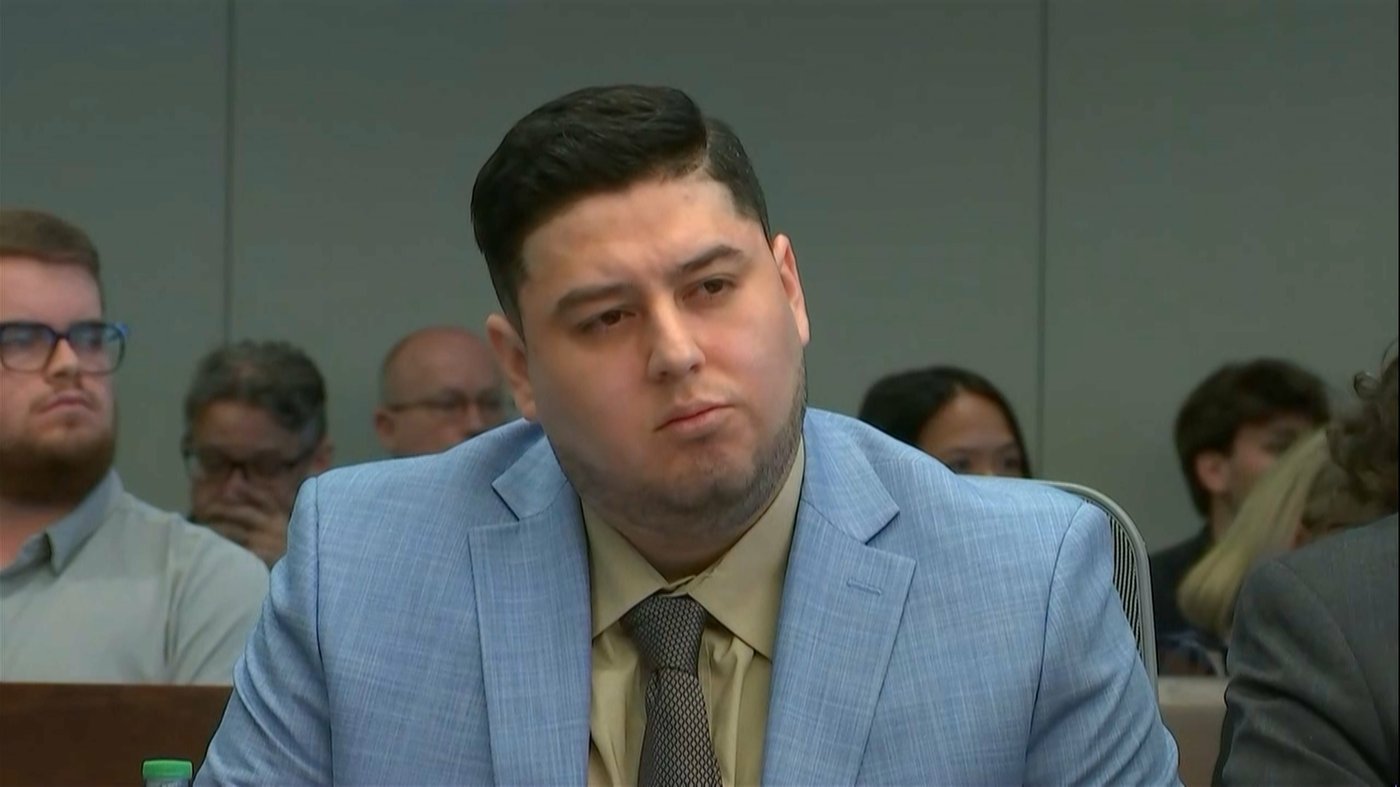
In this frame grab from video, Miguel Salguero-Olivares, who is on trial for the murder and rape of University of North Carolina student Faith Hedgepeth, listens to the prosecution's opening argument at a courthouse in Durham, N.C., on Wednesday, Oct. 7, 2026. (Network Pool/via AP)

Jury convicts man of rape, murder 14 years after UNC student’s death

Oct 23, 2026 | 2:40 PM

A man accused of killing a North Carolina college student 14 years ago was convicted Friday of first-degree murder, rape and other charges after prosecutors told jurors that forensic evidence was “screaming his name.”

Faith Hedgepeth was a 19-year-old sophomore at the University of North Carolina at Chapel Hill when she was beaten to death in her off-campus apartment in September 2012. Miguel Salguero Olivares was arrested nine years later after being pulled over for driving while intoxicated and providing a DNA sample that prosecutors say matched evidence from the crime scene.

Salguero Olivares, 33, did not testify during the trial, and his attorneys rested their case without calling any witnesses. Jurors deliberated for six hours over two days before convicting him of murder, rape, sexual offense and burglary. He was then sentenced to life in prison without the possibility of parole on the murder charge plus 45-65 years on the other charges.

Hedgepeth’s mother, Connie Hedgepeth, told the judge that she forgave her daughter’s killer long ago.


“It was just three weeks after her death. It didn’t matter who done it, I knew that I had to forgive, and I do forgive, but my heart aches for his family,” she said. “It was just such a senseless and cruel act, but we have to go on, and we just have to trust God and go on with our lives.”

Roland Hedgepeth, Faith’s father, said losing his daughter was like having his heart ripped out. He called her a beacon of hope who was born at a low point in his life and admitted it had been easier over the past 5,158 days to say he forgave someone he didn’t know.

“Today it got very real,” he said. “Nevertheless, I say it without reservation, I forgive Miguel for what he did.”

Calling those statements “powerful and kind,” defense attorney James Rainsford said he also could speak about his client and his client’s family but decided not to. “For me to try to blend the two things, I don’t think that’s what everybody needs at this point.”

Defense argued the client was falsely accused

In closing arguments Thursday, defense attorneys accused investigators of having “tunnel vision” in assuming that their client was a monster and not a “19-year-old boy” who had consensual sex with the victim days before her death. Prosecutors, meanwhile, urged jurors to rely on DNA evidence instead of distractions from the defense team.

“We know who did it. The forensic evidence is screaming his name,” said prosecutor Angela Garcia-Lamarca, who described the “uncurable agony” Hedgepeth’s family has endured.

“When the defendant brought that bottle down on her head and she started to bleed, that was the start of a bleeding that still hasn’t stopped,” she said. “He sentenced her to death. He sentenced everybody else who loved her to life. There was no one there to protect her. There was no one there to stop him — until now. Y’all are here. You’re here now, and you can stop him.”

Prosecution suggests victim spurned defendant’s advances

Nearly two dozen witnesses testified for the prosecution, including crime scene technicians, state and local law enforcement, a DNA expert and Hedgepeth’s friends.

Hedgepeth’s roommate, Karena Rosario, testified that she was drunk and sick when Hedgepeth drove them home from a club around 2 a.m. that Sept. 7. She said she later called a friend to pick her up, leaving Hedgepeth in the apartment alone. She returned hours later to find her roommate’s body.

Though no witnesses corroborated the theory, prosecutors suggested Salguero Olivares may have attended a barbecue hosted by Hedgepeth’s neighbor that night, unsuccessfully hit on the young women in the parking lot and then returned, embarrassed and angry, after Rosario left.

Forensic evidence was a focus

Experts testified that the defendant’s fingerprints and palm print were found on a wine bottle at the scene and that his DNA was found in Hedgepeth’s body, on a note written on a fast-food bag found at the scene and on a rum bottle covered in blood that investigators identified as the weapon in the killing.

Defense attorneys questioned Rosario’s account of that night, the processing of the crime scene and the reliability of some DNA evidence. They pointed out that police failed to search some areas of the apartment and later lost some possible blood evidence and emphasized that DNA from sexual intercourse can remain for days afterward.

“Maybe he was living the same life as other 19- and 20-year-old children that we’ve heard about in this case,” defense attorney Jason Murphy said. “Maybe he had too much to drink, maybe he forgot about an encounter.”

But special prosecutor Lisa Coltrane dismissed that as “noise.”

“No matter what kind of mistakes were made or things that were missed, it doesn’t erase the palm print; it doesn’t somehow lift the DNA out of Faith,” she said. “They didn’t talk to every single person in Chapel Hill, and it doesn’t matter. They still got the guy because he left his DNA like confetti all over that room.”

Holly Ramer, The Associated Press