
SUBSCRIBE! Sign up for our daily newsletter and never miss a story!

(Image Credit: Julianah Sahran/Dreamstime)
Oct. 20 showing at Monarch

SE Alberta filmmaker turns BRCA1 experience into breast cancer awareness documentary

Oct 20, 2026 | 8:28 AM

A 20-year-old southeast Alberta filmmaker is using her own experience with a hereditary breast cancer risk to help others navigate difficult decisions around prevention, surgery and support.

Myka Obrigewitch, who grew up near Seven Persons, is preparing to screen a feature-length documentary, “Boob Jobs Save Lives,” exploring the experiences of women affected by breast cancer and the BRCA1 gene mutation.

The film will be shown at Medicine Hat’s Monarch Theatre on Tuesday, Oct. 20, with doors opening at 6:30 p.m. and the screening beginning at 7:30 p.m.

—
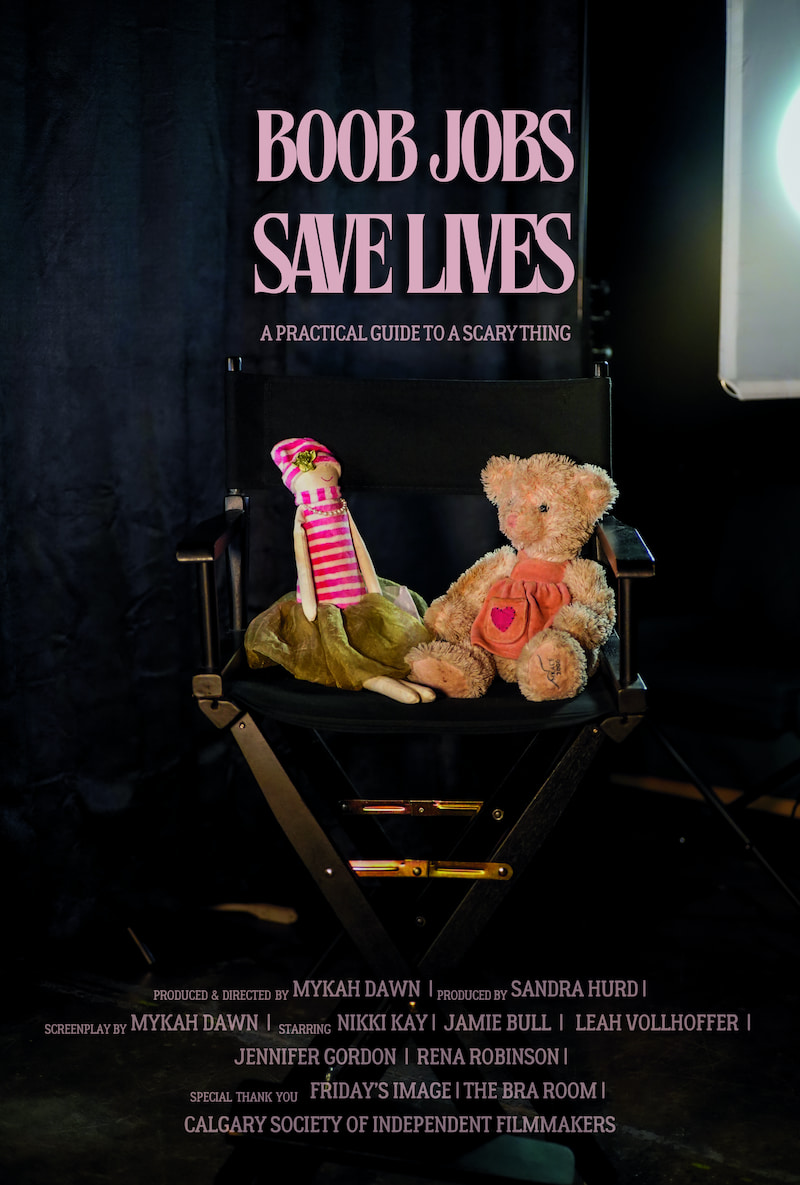

(Image Credit: Monarch Theatre)

The 90-minute documentary will be followed by a question-and-answer panel featuring nurses, reconstructive surgeons and a breast cancer survivor.

Obrigewitch said her own genetic testing experience inspired her to create the project after learning she carried the BRCA1 mutation.

She graduated high school at 17 and went on to study film and video at the Southern Alberta Institute of Technology in Calgary.

While attending SAIT, she pursued genetic testing after learning that two of her sisters, her mother and her aunt, also carried the mutation. Her mother and aunt are breast cancer survivors.

After about a year of testing, Obrigewitch received a positive result for the mutation at age 19, as she was finishing her film studies.

With a strong family history of breast cancer, she said she understood the next steps and the preventative options available to her.

But she began thinking about other young women facing the same news without knowing where to turn.

“I couldn’t stop thinking about the women who were in this situation for the first time and didn’t really know what steps to take,” Obrigewitch said.

“Being so young and having to make the decision of going through a preventative surgery can be really daunting.”

Obrigewitch chose to undergo a preventative double mastectomy and breast reconstruction.

Because the surgery was preventative and she had not developed cancer, she did not require chemotherapy or radiation.

The reconstruction process took about six months and involved tissue expanders before implants could be placed.

She said the experience affected her body image, mobility and strength, but she remains grateful she was able to take preventative action.

The BRCA1 mutation significantly increases the risk of breast and ovarian cancers, although carrying the mutation does not mean a person will inevitably develop cancer.

Preventative options and screening decisions depend on individual circumstances and medical advice.

Obrigewitch’s documentary grew out of a series of short films she began creating about a year ago.

The first video was produced for the Canadian Breast Cancer Network, which approached her to tell the story of being a young woman navigating preventative surgery and a hereditary cancer risk.

After the video was released, she said viewers continued asking for a follow-up.

That response led to a second, roughly seven-minute short film, produced with a crew of about 30 people and approximately $700 in funding from two sponsors.

The project was subsequently selected for several festivals.

The attention eventually led the Monarch Theatre to approach her about hosting an event in Medicine Hat.

Wanting to offer audiences a more complete story, Obrigewitch filmed a feature-length version on Sept. 10.

The film brings together the earlier short films as an anthology, connected by interviews with five breast cancer survivors.

She said the project also explores how family members can support women facing a genetic diagnosis or preventative surgery, including the physical and emotional challenges that can follow.

The screening is free to attend, with a suggested $5 donation at the door. Donations will go directly to the Canadian Breast Cancer Network.

Organizers are also planning a pink carpet where attendees can take photographs before the screening.

Obrigewitch said she is grateful for the opportunity to showcase the work while providing information and support to people affected by breast cancer.

October is Breast Cancer Awareness Month, a time when health organizations encourage awareness of breast cancer risks, screening and support for those affected.

The Canadian Cancer Society says one in eight women in Canada will learn they have breast cancer in their lifetime.

For Obrigewitch, the goal is to make sure young women confronting a potentially life-changing diagnosis know they are not alone, and that their families and support networks have a better understanding of what lies ahead.