SUBSCRIBE! Sign up for our daily newsletter and never miss a story!

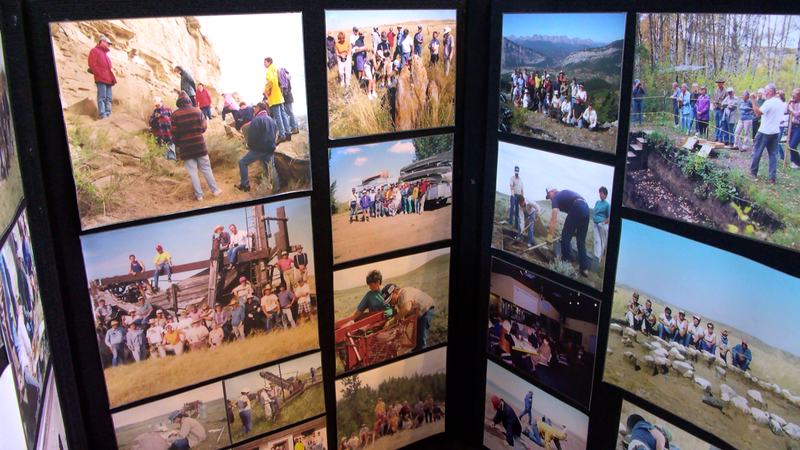
Archaeology Society of Alberta celebrates 50 years of historical preservation across province and Medicine Hat. Jayk Sterkenburg/CHAT News
HISTORY

Archaeologists share efforts in Medicine Hat upon 50 years of historical protection

Apr 27, 2025 | 1:49 PM

A 50th anniversary conference for the Archaeological Society of Alberta at Medalta Historic Clay District in Medicine Hat highlighted the importance of continuing to protecting significant archaeological sites across the province.

Talva Jacobson is an industrial archaeologist, and also had the role of investigator of excavations at Medalta in 2010.

She said she loves that industrial sites preserve the working class population.

“Each lifetime that has replaced the previous has been able to build our community. And what a legacy,” Jacobson told CHAT News Saturday.

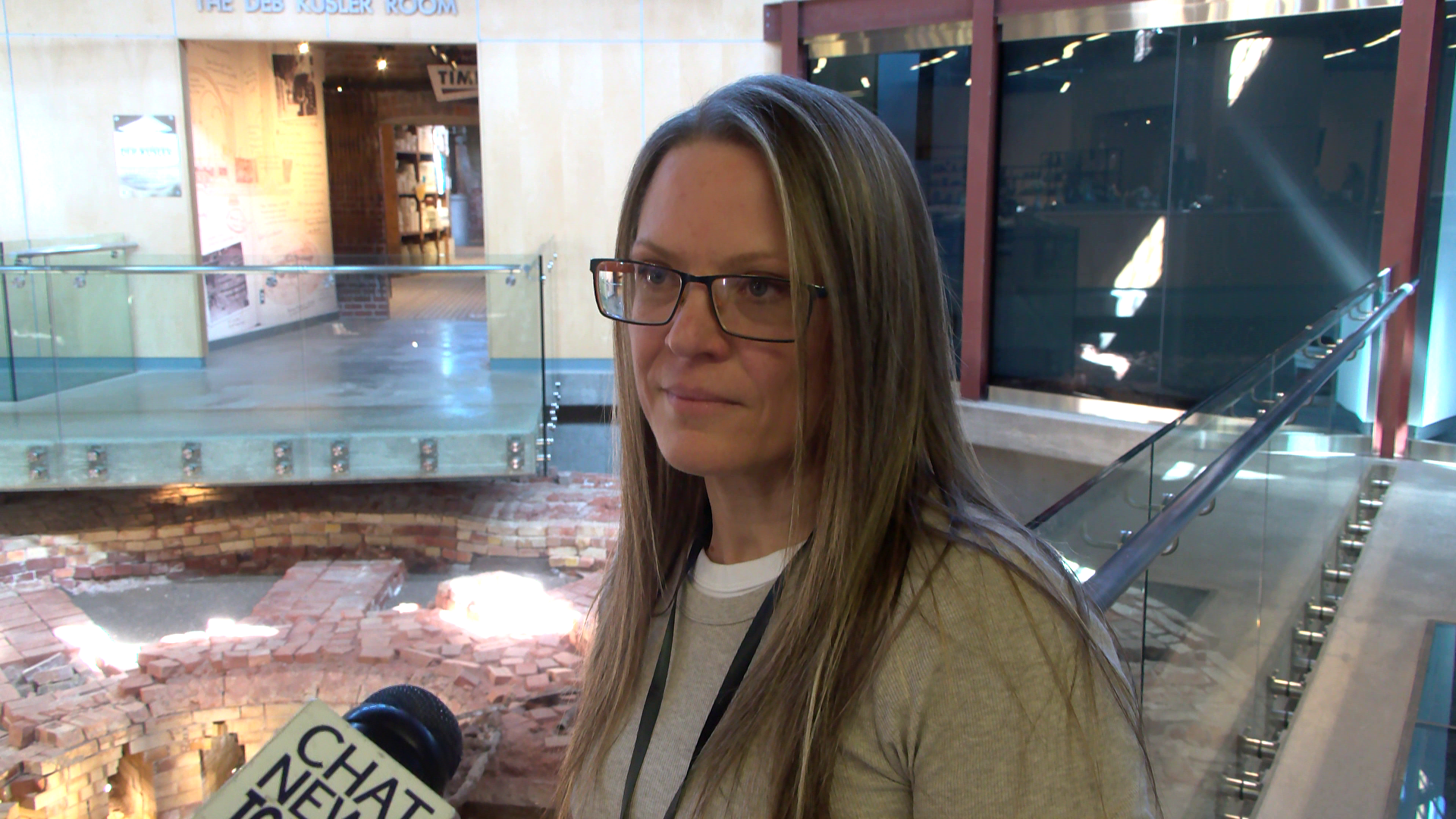
“That’s what artifacts provide — hints to the stories of these people’s lives.”

Jacobson and her team found the kiln foundations that are now on display under the concrete floors of Medalta’s lobby.

They also discovered a wealth of other archaeological information, which Medalta says aids in understanding the processes of industry in the early twentieth century.

“The tangible remains are the physical reminders that people were here, living in our space,” Jacobson said.

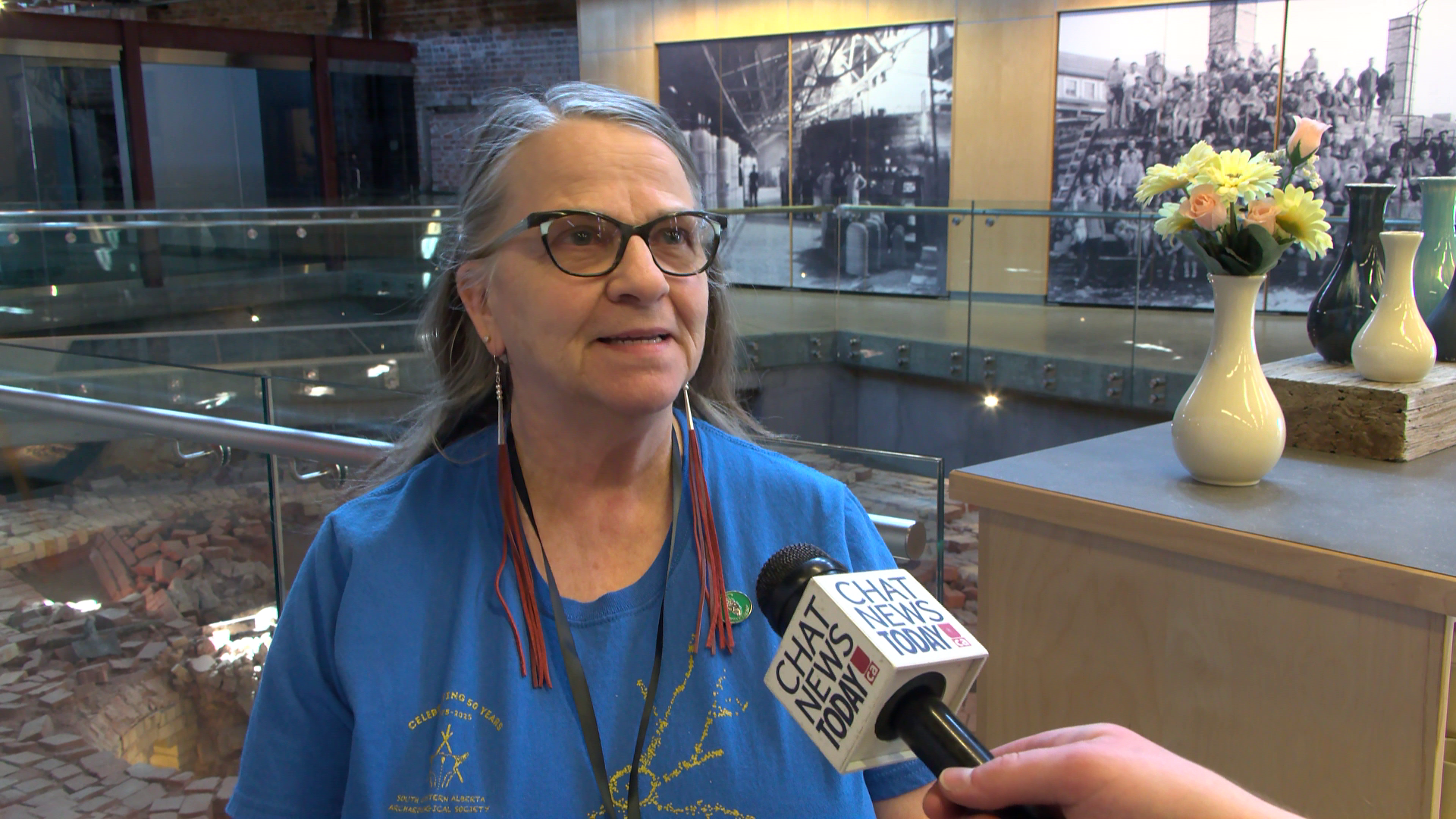
Jacobson said each lifetime that has replaced the previous has been able to build our community. Jayk Sterkenburg/CHAT News

The ASA seeks to deepen Albertan’s understanding of the history embedded within the landscape through education, fieldwork and advocacy.

Brian Vivian, president of the ASA, said the society’s professional archaeologists have been working in the province now for 50 years.

He said they have a good understanding of the types of sites that can be found and where, and of the different changes that have happened over time.

He said, however, that there are still lots of questions to be answered.

“There’s still times we realize, archaeologically, that we may have got things wrong in the past,” he said.

“We’re changing interpretations, but that’s the nature of how science works.”

Vivian said the more data added to what is known, the more self-correction can be done — to re-evaluate and re-interpret results.

“We’re stretching the historic record far beyond what is written history,” he said.

“Where we’re working with, for instance, First Nations sites, we can find documentation of archaeological sites that could be eight, ten, twelve-thousand years in age, which is way beyond what we have any kind of understanding of historic records.”

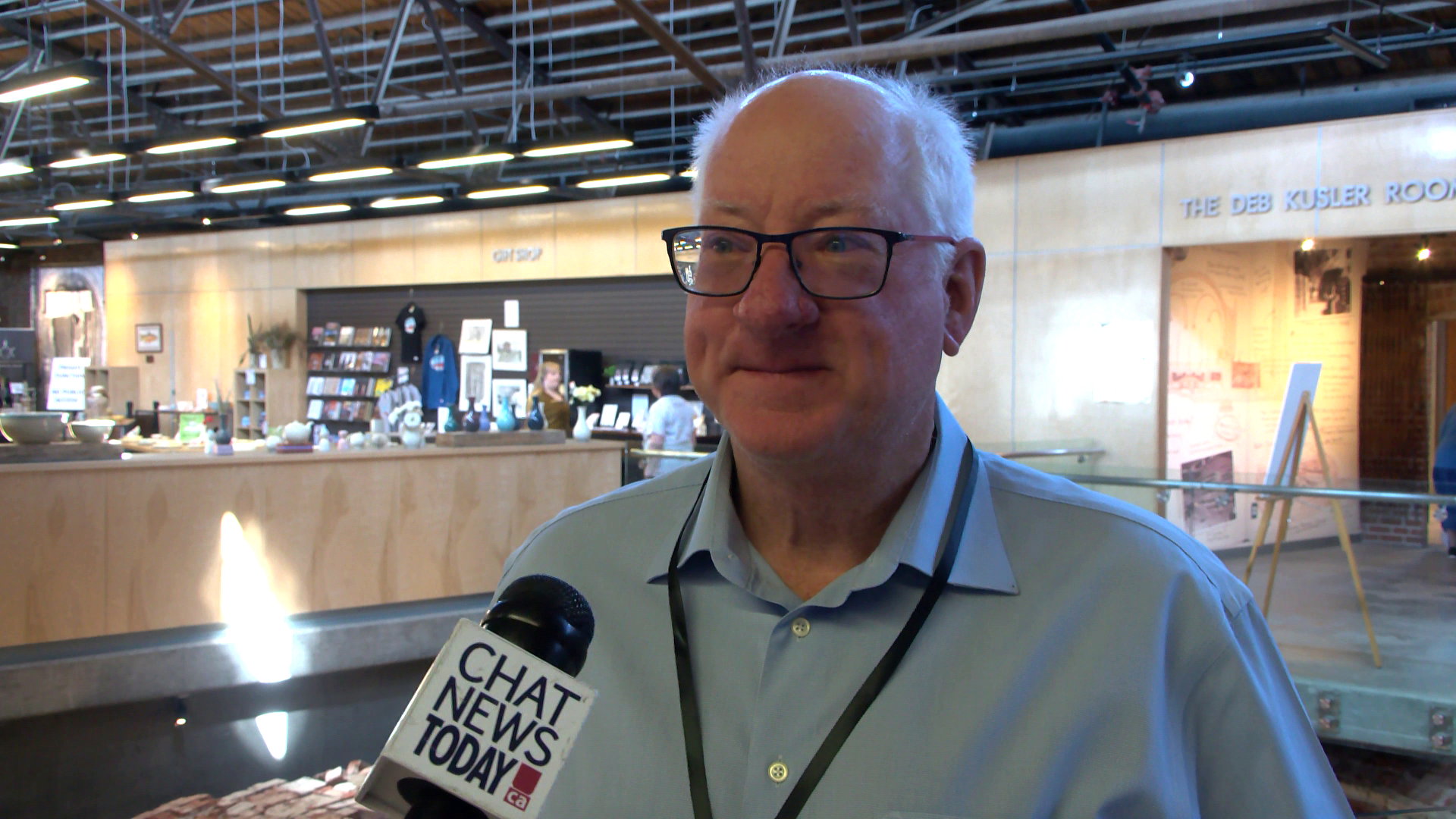
Vivian said archaeologists are stretching the historic record far beyond what is written history. Jayk Sterkenburg/CHAT News

Wendy-Ellen Nittel, president of the South East Alberta Archaeological Society in Medicine Hat, said people may get archaeology in Alberta confused with the paleontology of dinosaur remains.

She said conferences in Medicine Hat and across the province can show that archaeology is presenting how cultures have worked together over time.

“Archaeology, we usually think of it being in the ground, but it’s also people,” she said.

“When they find things, there’s the history. But where did it come from?” she added.

“It’s just not something that was, ‘Oh, well, that’s history’, but where did it come from? What did it mean to the rest of us?”

Nittel said we need to be more cohesive in bringing together parts of history — as Alberta has pieces from indigenous, settler and industrial technology.

“We’re seeing how we all can work together to get the same thing. Let’s get our history of Alberta out there,” she said.

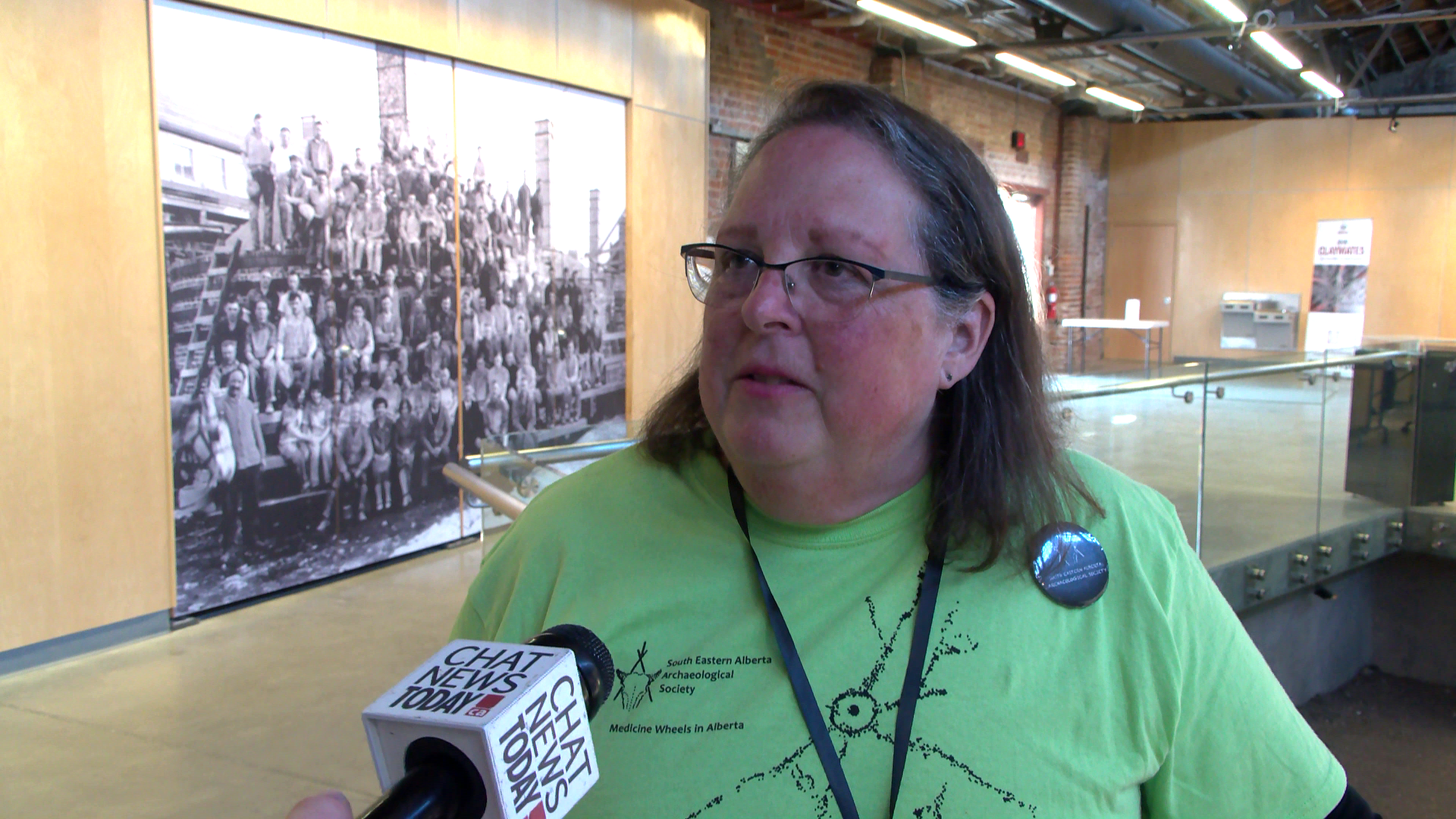
Nittel said conferences across the province can show that archaeology is presenting how cultures have worked together over time.. Jayk Sterkenburg/CHAT News

Cathy Linowski, member of the SEAAS, said there is a feeling of connection to the past, especially in a place like the Saamis Archaeological Site in the coulee of Seven Persons Creek in Medicine Hat.

“One of the cool things about the site there is we have pottery shards,” she said.

“A lot of the plains peoples didn’t use pottery, but here there was clay, so they could build it. And with the shards, there’s finger prints,” she added.

“So you see that it was a real person who built this pot and maybe decorated and shaped it, and used it for everyday kinds of things.”

Linowski said there is a feeling of connection to the past in archeology sites. Jayk Sterkenburg/CHAT News

Jacobson said professional archeologists and those interested in preserving heritage get a chance to have a dialogue with each other, and hear from residents of their own input on archaeological sites.

“They are that first line of defense in understanding local heritage and archaeological resources in their community. Often they’re the ones that find things,” she said.

Jacobson said the community felt it was important to keep the historic kiln foundations on display at Medalta so they could be more connected to the people who built them.

She said it helps the community understand the lives of people that are missing from the written record.