SUBSCRIBE! Sign up for our daily newsletter and never miss a story!

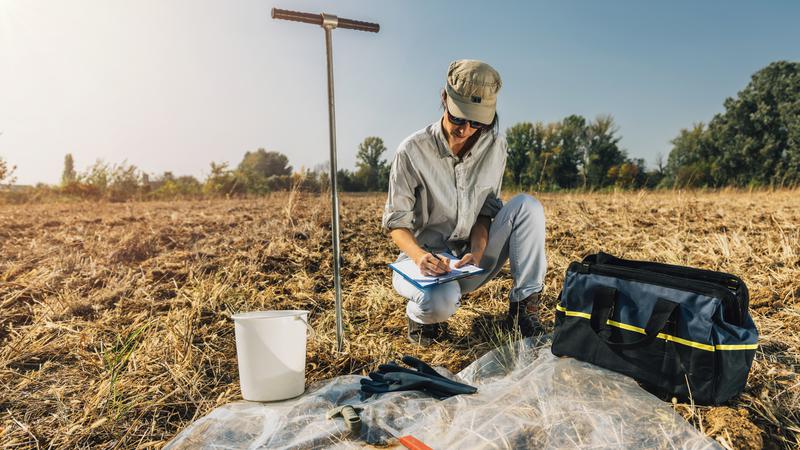
'World Soil Day' proposes three M's: Measure, Monitor, Manage. Microgen/Dreamstime.com
AGRICULTURE

Long-term soil health in Medicine Hat area ‘a challenge’, expert says

Dec 6, 2024 | 11:32 AM

Growing demand for food production and the impacts of climate change concern the long-term health of soil in Canada, including in the area of Medicine Hat, an expert says.

World Soil Day as designated by the United Nations took place on Dec. 5, and is aimed at raising awareness to the growing risks facing the world’s soil.

The theme for the cause is Caring for Soils, and highlights the three “M”s of soil sustainability: Measure, Monitor, and Manage.

Agriculture scientists are doing research to maintain soils as part of the “three Ms” across the country, and here in Medicine Hat.

Innovative technologies have been part of researchers efforts to manage soil across the prairies.

Chelsea Ehresman, manager of the Centre for Innovation at Medicine Hat College, says that they are making efforts with their own projects.

“Soil in our region is a challenge. Our region is full of agricultural producers. Soil health leads to plant health, which leads to better nutrients in the food that we eat,” she told CHAT News.

“We want to ensure that we can maintain soil health for the future, but we also have the technology to validate some of the practices that producers are using here to maintain that soil health, and be able to communicate it out to the public so we can be confident in the food that we’re eating.”

Ehresman said the centre received funding this past summer for agriculture research that will support the college over the next five years.

Over the winter, they’re able to build projects for use in the warmer seasons, but soil sensors on campus land continue to gather data year round.

Dr. Mervin St. Luce, research scientist at Swift Current Research and Development Centre, is using a process that saves so called “fingerprints” of samples to spectral libraries.

“The information that we capture will go towards improving digital soil mapping in the prairies. So, digital maps at higher resolution and finer scales, not just at regional levels, but even at field level,” he said.

“We are interested in soil properties such as texture, carbon content, organic matter content, electrical conductivity and pH. This will give producers more detailed information about their field.”

St. Luce explained that a fingerprint of a soil sample is obtained by shining light of specific wavelength towards the sample, with a process alike that of an X-ray or CT scan, with the image captured by sensors.

It’s called a soil spectroscopy. The image contains information about the composition of the soil and can capture the impact of land management practices and producer practices in fields.

“The prairies contain more than 80 per cent of arable land in Canada. So, the prairies are the food basket of Canada,” he said.

“We have to properly manage our soils for future generations and for Canada as a whole, for its economy. And, you know, Canada feeds the world, basically,” he added.

“There’s a lot relying on how we manage our soil. We do not want to have our soils degraded, that they lose their quality and health.”

In Canada, growing demand for food production and the impacts of climate change concern the long-term health of our soil.

Ehresman said a dedicated international soil day is important to raise awareness “to the importance of soil health to maintain our food supply system for the future.”

That’s something that’s really built into a lot of what our region does. The producers that I talk with, soil health is very much important to them, something that they’ve been thinking about for decades,” she added.

“I think having that day to really get the rest of the world thinking about our soil health is important.”