SUBSCRIBE! Sign up for our daily newsletter and never miss a story!

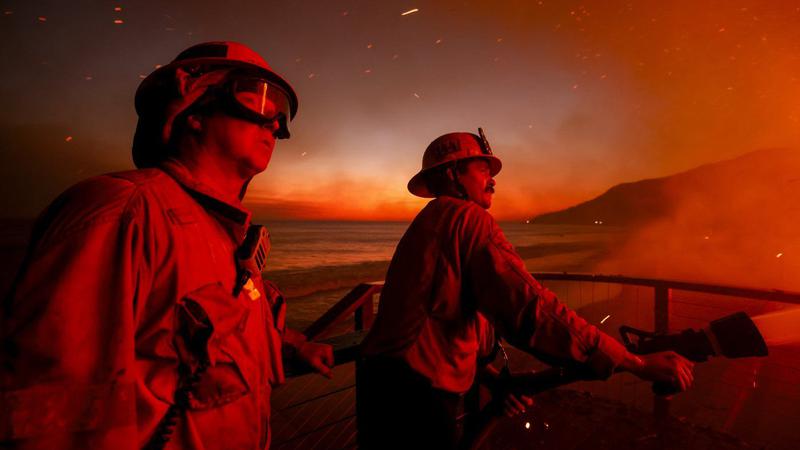
Firefighters work from a deck as the Palisades Fire burns a beachfront property Wednesday, Jan. 8, 2025 in Malibu, Calif. (AP Photo/Etienne Laurent)
FIREFIGHTING

‘They’re not going to stop until they get the job done’: Medicine Hat fire chief on LA fire fighters

Jan 16, 2025 | 3:17 PM

Firefighters from across the North American continent have converged onto Los Angeles to fight the wildfires.

With at least 25 victims of the devastating wildfires and tens of thousands of structures burned to the ground.

Medicine Hat Fire Chief Chad Eakins has a long history of fighting fires around Medicine Hat and shared some perspective.


Eakins said for those fighting the fire, they can expect the unexpected.

“Those natural disasters are really challenging to deal with, the size of the fires and the amount of resources that are required to try to even help in those situations,” Eakins said.

“I’m reluctant to say keep them under control because frankly, it’s extremely difficult with those natural disasters and the size of that and all of the outside factors that come along with that, with wind and environment and and topography, all of the rest that is so difficult to try to keep under control.”

Eakins said in situations like in California, resources would be stretched instantly.

“I think we’ve seen examples of that in Canada throughout the years. It’s all preparation. Specifically here in Medicine Hat, we have agreements in place, and even in the province of Alberta, we have agreements there,” Eakins said.

“We will pull from Ontario, we’ll pull from different provinces when we see the wildland firefighting that happens here in Alberta.”

Eakins said it’s strenuous and constant for those fighting the fire until it’s under control.

“I think one of the biggest things is firefighters are wired to save property and lives, and I think it’s devastating when you can’t do that and when you’re struggling to do that,” Eakins said.

“I think this is one of the largest fires in probably U.S. history for wildland and loss. And quite honestly, I think having that happen can certainly take its toll on firefighters and the amount of work.”

Eakins said a firefighters mindset is wired to get the job done.

“They’re not going to stop until they get the job done,” Eakins said.

“You take those big situations and you bring them down into pieces where you can, manageable pieces, so you start to sector out parts of the map and in certain areas, the high-risk areas that you’re going to work on first and then work your way through to solve the problem,” he added.

“Hopefully you can rely on the resources that are coming in that are going to help you with that.”

Eakins said weather can certainly play a factor.

“Whether it’s humidity or wind, and wind is obviously one of the largest factors,” Eakins said.

“The size of the embers that are pushing through LA and because of what’s burning, whether it’s infrastructure, houses, those types of things, but you’re certainly seeing the impact that the wind can have,” he added.

“It really changes the way that we approach fires.”

Eakins said they have seen the impact of wind while fighting fires in Medicine Hat.

“We’ve had windy days where we had one, I remember a few years ago, where we had one structure fire that turned into three and one was across the street because of wind,” Eakins said.

“It certainly is a factor for us and something that we’re constantly evaluating when we’re out doing that.”