SUBSCRIBE! Sign up for our daily newsletter and never miss a story!

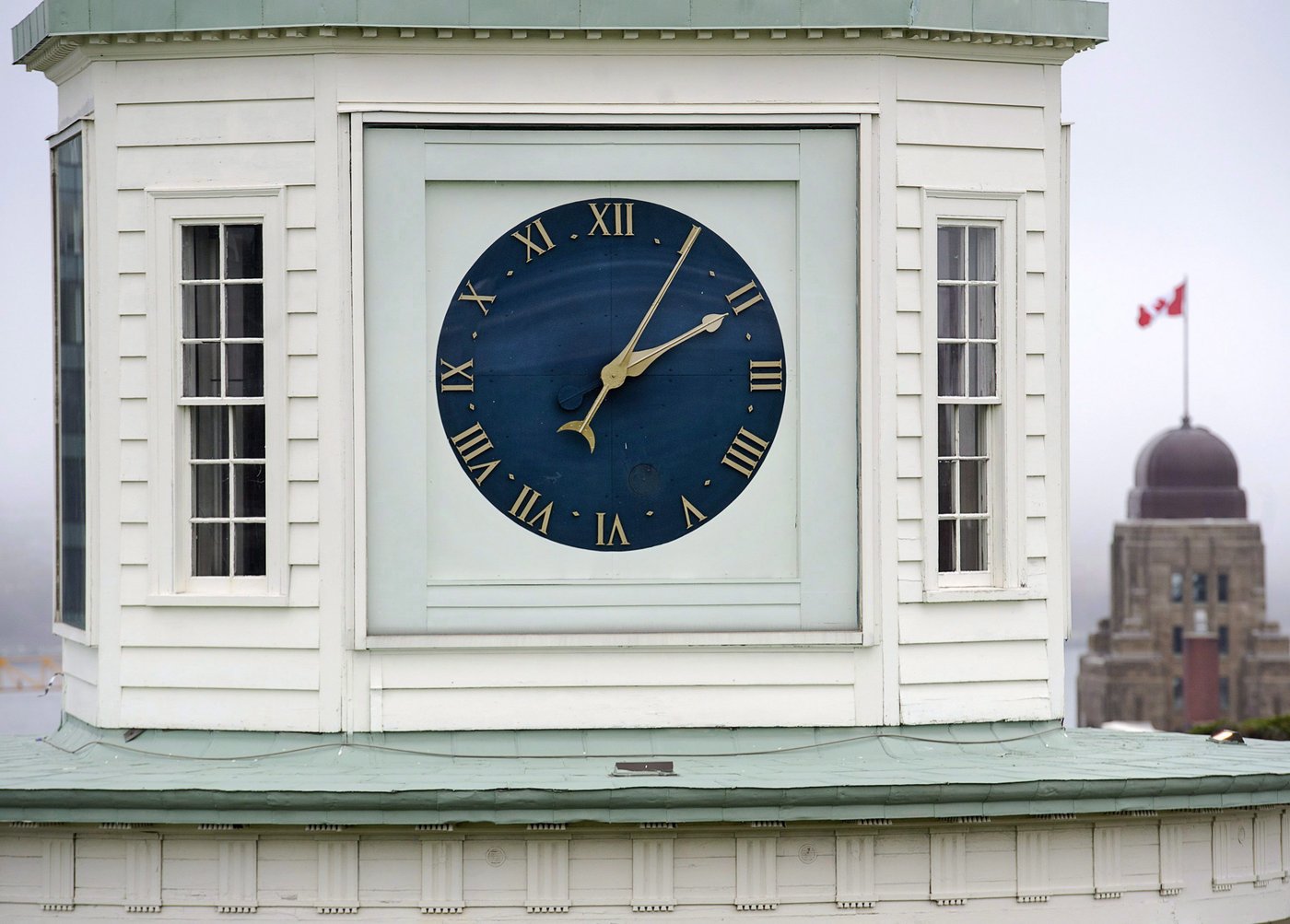
The Old Town Clock is seen in Halifax on Friday, Nov. 3, 2017. THE CANADIAN PRESS/Andrew Vaughan

Clocks from coast to coast to coast: A breakdown of time change rules across Canada

Oct 31, 2026 | 6:00 AM

Much of the eastern half of Canada switch their clocks back on Sunday, while the western half will not this year. Here’s a look at the breakdown of what it means to residents:

British Columbia

Announced in March that it was moving to permanent Pacific daylight time. The change also means that parts of northeastern B.C., which have been on mountain standard time year-round, are now in alignment with the rest of the province. It will be aligned with Washington State in the summer months and one hour ahead in winter.

—

Alberta

Located in the mountain time zone, also switched to permanent daylight time this year. The province calls it Alberta time.

—

Saskatchewan

On permanent central standard time since 1966.

—

Manitoba

Will be sticking with daylight time in the central time zone, meaning it won’t be aligned with the other Prairie provinces and will stay one hour ahead. The province will be on the same time as Ontario and Quebec in the winter and one hour behind in the summer.

—

Ontario

Passed a law in 2020 to end the twice-yearly changing of clocks and make daylight time permanent — but only if Quebec and New York agree to do the same. Earlier this month, the province published a regulation leaving a portion of the northwest on year-round time in alignment with Manitoba.

—

Quebec

Premier Paul St-Pierre Plamondon says his government intends to abolish the time change. He said on Oct. 28 that the province hasn’t yet decided whether to keep daylight time or standard time year-round.

—

Atlantic provinces

In 2022 decided to hold off on any move toward dropping the time change until they saw what neighbouring jurisdictions would do.

—

Yukon

Moved to end time changes in 2020. The territory observes mountain standard time.

—

Northwest Territories

Followed Alberta’s lead earlier this year to end seasonal time changes. The territory is on permanent daylight time.

—

Nunavut

Spans three time zones; continues to change clocks twice a year except for Southampton Island.

The Canadian Press