SUBSCRIBE! Sign up for our daily newsletter and never miss a story!

(Image Credit: Jesse Gill/CHAT News)
Referendum

Early Alberta referendum results show support for Canada, spark calls for consultation

Oct 20, 2026 | 1:05 PM

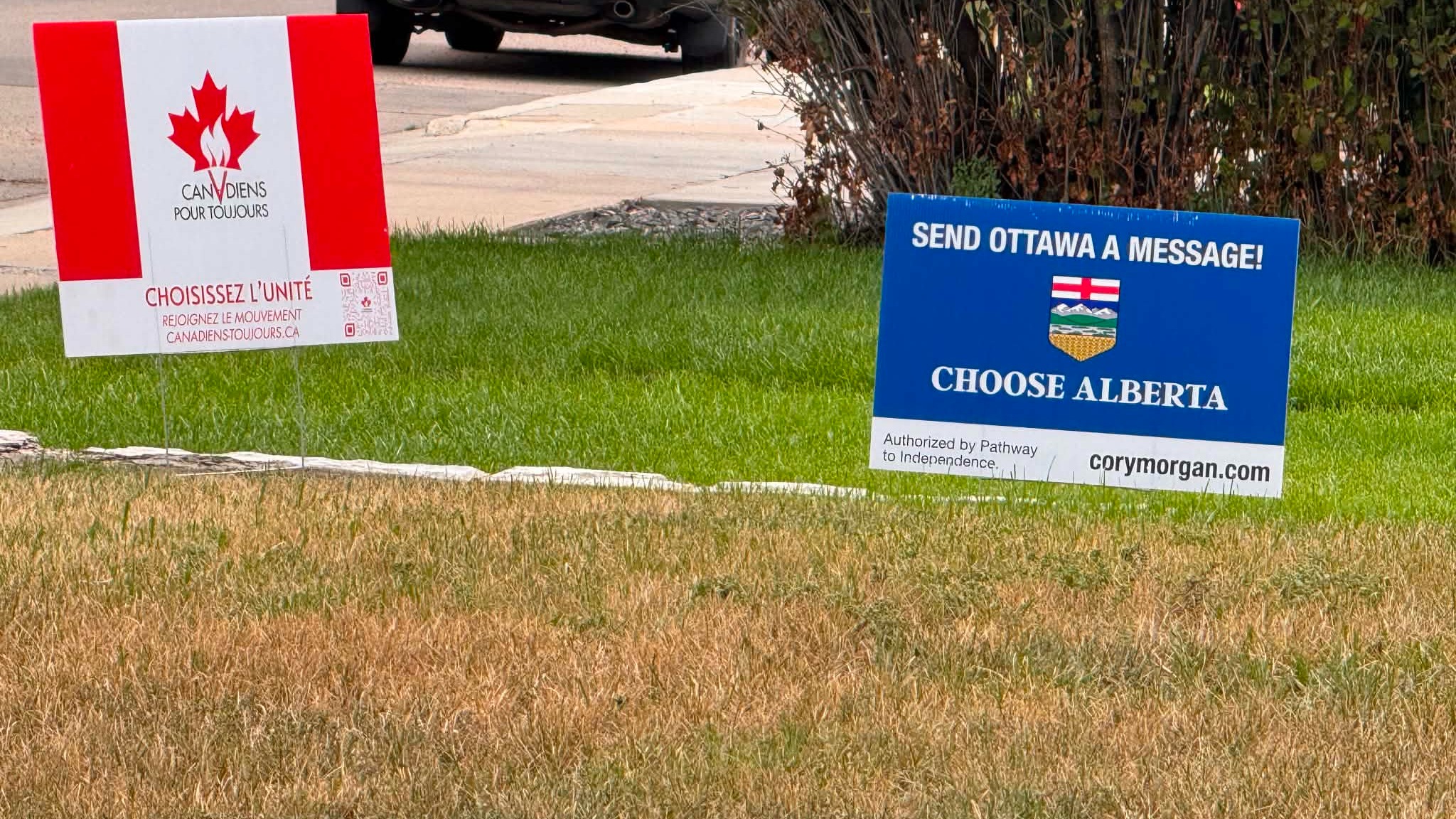
Alberta’s early referendum results show strong support for remaining in Canada.

About 75 percent of voters in early numbers supported staying within Confederation.

Retired political science instructor Jim Groom said questions surrounding provincial autonomy, immigration and government spending will require further scrutiny.

He said the results suggest the separatist movement has not gained majority support among Albertans.

Also adding that the vote could reinforce existing political divisions, with voters becoming more firmly committed to their positions after casting ballots.

Groom said strong voter participation was one of the more encouraging aspects of the referendum, adding that it demonstrates that Albertans were engaged in decisions affecting the province’s future.

He added that the results could provide greater certainty for businesses and investors who have been watching the debate over Alberta’s relationship with the rest of Canada.

“Certainty is always good for business, and the business community will be very favourable about this,” Groom said.

The executive director of the Southeast Alberta Chamber of Commerce said the early referendum results offer an opportunity to move forward, but that governments must prioritize consultation and economic certainty before pursuing significant policy changes.

Lisa Dressler said the results could help restore confidence among businesses making investment, hiring and long-term planning decisions. However, she cautions that the vote should be a starting point for further discussion, not a substitute for consultation.

“As a Chamber of Commerce, our focus is going to remain on practical conditions businesses need to succeed,” Dressler said.

“Economic stability, access to workers and skills, predictable regulations, competitive taxation, reliable infrastructure, expanded market access, and constructive relationships between governments.”

Dressler said employers, municipalities, industry associations, post-secondary institutions, settlement organizations and communities should have opportunities to contribute to future policy discussions, particularly on issues that directly affect them.

She also says provincial and federal governments must maintain constructive working relationships and establish clear processes and timelines for continued economic cooperation.

Trade, regulatory issues and market access remain key concerns, especially as businesses navigate uncertainty surrounding U.S. tariffs and other international economic pressures.

Dressler says Alberta also needs to address interprovincial trade barriers and provide investors with a predictable regulatory environment.

“The case for investing in Alberta, investing in Canada, again comes down to certainty and competitiveness and jurisdictions that work well together,” Dressler said.

She adds that businesses need governments to actively address barriers to growth.

“We need to ensure that we’re making those efforts to restore that confidence and that desire to invest and reinvest in our province, in our communities, and in our country,” Dressler said.

While the question of separation drew significant attention, voters also weighed in on nine additional questions dealing with provincial authority and other policy issues.

Groom said the additional questions deserve closer examination, particularly where results are close, and the implications of proposed changes are complex.

He was critical of the Alberta Next panel process that helped shape the questions, arguing the topics presented to participants influenced the discussion and reflected the provincial government’s priorities.

Groom also questioned whether some proposals could realistically be implemented, noting that constitutional amendments and changes involving federal responsibilities would require cooperation beyond Alberta.

Immigration was a major theme across several referendum questions.

“Immigration is a dual authority responsibility, so it does come under both provincial and federal, but we’ve handed over, for the years, our responsibility on immigration,” Groom said.

“Quebec didn’t do that, and they retained their immigration control, so there’s nothing wrong with Alberta going forward and trying to exert their control over immigration.”

However, he questioned the provincial government’s approach to immigration and its connection to broader economic concerns.

Groom argued that population growth has placed pressure on public services, but said funding and policy decisions need to be considered when assessing challenges in health care and education.

He said the final results for the nine additional questions will be worth watching, particularly given the close margins on some issues.

“A lot of people went in and voted on stay or go, but didn’t vote on the nine. So the turnout for those might be interesting to see, if they were ignored by some folks,” Groom said.

Groom said the referendum provides an opportunity to examine Albertans’ priorities, but the longer-term implications will depend on how the government responds and whether proposed changes can be implemented.

On Tuesday, Elections Alberta continued updating results on its website. Official results are expected to be announced on Oct. 29 at 10 a.m.