SUBSCRIBE! Sign up for our daily newsletter and never miss a story!

Flynt/Dreamstime
GAS PRICES

Recent prices at the pumps in Alberta some of the lowest seen in four years, but Medicine Hat’s remain among highest

Dec 30, 2025 | 3:00 PM

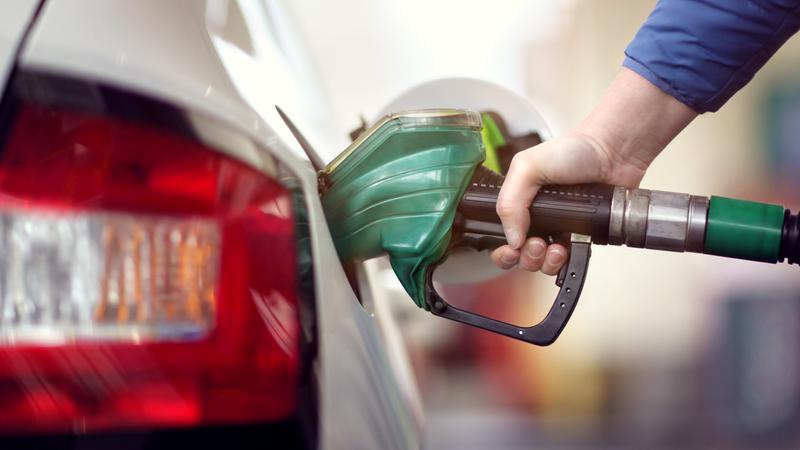
The price at the gas pump is down at many locations across Canada, which sat at an average of 123.1 cents per litre early Tuesday afternoon, according to GasBuddy.

Medicine Hat was slightly better than that, with the average at 122.9 cents per litre, down 12 cents from the same time frame last year.

But, it sits higher than the Alberta average of 113.4 cents per litre, which is down 29.8 cents per litre from a year ago.

Patrick De Haan, head of petroleum analysis at GasBuddy, said this is consistent across most of Canada and even globally, as provinces are seeing prices vastly lower than last year.


“A lot of the low prices that we’ve seen in the last few weeks are a result of seasonal trends, falling gasoline demand. While the holidays have led to some travellers on the road, most Canadians are taking abbreviated work schedules, not driving every day because of the holidays. Schools are also closed. That gives room for gasoline demand to decline,” De Haan said.

“In addition, oil prices being at multi-year lows due to OPEC’s increase in oil production certainly helps, as well as the continued pause in the federal carbon tax, which leads to an 18-cent a litre savings, coupled with refinery output, which has increased in recent weeks as maintenance has been concluded,” he added.

“More supply of both oil and gasoline, as well as lower demand and lower oil prices, have all pushed prices across Canada to some of the lowest levels we’ve seen in over four years.”

Alberta had the second-lowest average gas price in Canada according to GasBuddy, with Manitoba a cent lower at 112.4 cents per litre.

Monday’s daily average for Alberta was 1.1 cents lower, but the small increase still has prices down 3 cents compared to last month, and 29.8 cents when compared to last year’s average.

“The price of oil is at its lowest level, really, since the pandemic back in 2021. So it’s no surprise that many areas globally are seeing the lowest refined product prices, diesel, gasoline, jet fuel, in several years on account of additional oil,” De Haan said.

“But what may be good for your wallet may not be good for oil producers, especially in areas like Alberta. The price of Western Canadian select crude oil is down to about $45 a barrel. Eventually, those ultra-low prices will likely mean some impact to the amount of oil being produced, and could eventually lead to higher prices,” he added.

“Having said that, gasoline prices are at multi-year lows; that’s something that should stick around with us for the next several weeks at least. There may be some volatility, low-level volatility, in gas prices over the next six weeks.”

The low gas prices are expected to shift around Valentine’s Day, when it hit 157.1 cents per litre in Alberta in 2025, the highest provincial average of the year.

Medicine Hat reached its highest average during 2025 on Mar. 31, when prices averaged 152.1 cents per litre.

De Haan said it’s typical to see gas prices begin their seasonal rise in mid to late February.

“There’s a little bit of time we’ll see these low prices stick around, but there could be a few bumps in the road here and there,” De Haan said.

“There are still geopolitical tensions, including Russia and Ukraine, that continue to be on and off peace talks, as well as the U.S. blockading Venezuela’s oil exports. All those issues could impact prices in the weeks ahead,” he added.

“Generally speaking, that happens in mid to late spring. It varies year to year, depending on maintenance. Typically, it’s in a timeframe of April or May.”

December to January is typically when the lowest gas prices of the season are seen.

The average prices in locations across Alberta varied Tuesday afternoon, with Medicine Hat’s average of 122.9 cents per litre remaining as one of the highest.

  • Leduc 104.4
  • Red Deer 104.9
  • Walsh 108.4
  • Edmonton 109.6
  • Lloydminster 109.9
  • Grande Prairie 111.9
  • Brooks 113.9
  • Okotoks 113.9
  • Lethbridge 114.9
  • Calgary 115.4
  • Fort McMurray 115.9
  • Taber 116.8
  • Airdrie 118.9
  • Bow Island 119.9
  • Hinton 125.9

De Hann said competition tends to drive the prices of gas down.

“Some of those rural stations may not be selling at high volumes, and they may also have gasoline in their storage tanks that they bought days or potentially weeks ago at a higher price,” De Haan said.

“In addition, some of those smaller communities with lower volumes may need to sell at a higher price to keep their business afloat, whereas larger wholesale clubs that sell extremely high volumes generally need a lower margin to break even,” he added.

“We should see the price in Medicine Hat decrease a bit more, whether that’s 5 or 10 cents a litre. It’s tough to know exactly if any retailer is going to become a bit more aggressive.”

If lower prices are to be seen in Medicine Hat, De Haan expects that to be in the next three to six weeks.

He adds that essentially all gasoline has to conform to Canadian standards.

“All base gasoline is essentially the same. There’s probably very little difference,” De Haan said.

“There’s probably a lot more difference in how you feel you burn through gasoline, but the exact science of that gasoline is very, very similar, probably in the ballpark of all gasoline being within 99.99% of other brands,” he added.

“And ultimately, you’re buying essentially the same product across whatever retailer you may be going to.”

He adds that unless your vehicle requires premium gasoline, using it is simply flushing money down the toilet.

“There’s no quality difference between regular mid-grade and premium. The only difference is simply the octane, the fuel’s ability to resist pre-ignition,” De Haan said.

“Anyone who tows cars or tows with their vehicle or higher horsepower applications or turbocharged vehicles will know the difference between octane, but it’s not any better,” he added.

“Your engine doesn’t care whether it’s regular or premium, unless your car requires premium, of course, and then you’ll probably notice or potentially hear a difference in that fuel.”