SUBSCRIBE! Sign up for our daily newsletter and never miss a story!

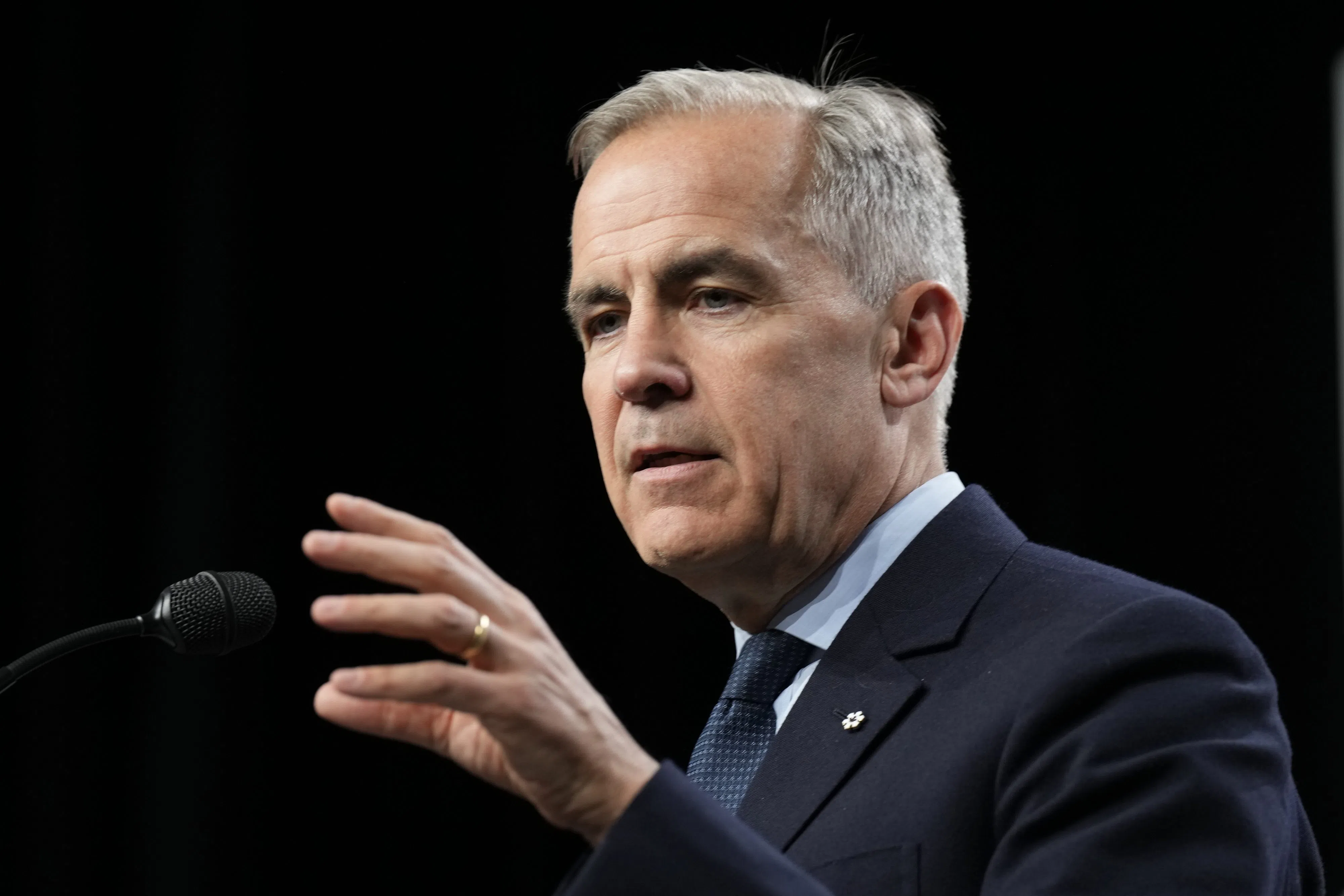
Prime Minister Mark Carney is seen during the closing news conference at the G7 Summit in Kananaskis, Alta., Tuesday, June 17, 2025. THE CANADIAN PRESS/Adrian Wyld
NATIONAL

Carney calls for ‘diplomatic solution’ after U.S. strikes on Iran

Jun 22, 2025 | 6:25 AM

Prime Minister Mark Carney is calling on all parties to resume talks for a “diplomatic solution” after the U.S. struck three sites in Iran overnight with the aim of destroying its nuclear weapon ambitions.


“As G7 leaders agreed in Kananaskis, the resolution of the Iranian crisis should lead to a broader de-escalation of hostilities in the Middle East, including a ceasefire in Gaza,” Carney said in a statement to X.


He also acknowledged the threat poised by Iran’s nuclear program, hailing it as “a grave threat to international security” in his post.

“Canada has been consistently clear that Iran can never be allowed to develop a nuclear weapon,” said Carney.

“While U.S. military action taken last night was designed to alleviate that threat, the situation in the Middle East remains highly volatile. Stability in the region is a priority.”

U.S. President Donald Trump asserted Saturday evening that Iran’s key nuclear sites were “completely and fully obliterated” in an address to the nation from the White House.

There was no independent damage assessment.

The Atomic Energy Organization of Iran confirmed that attacks took place on its Fordo, Isfahan and Natanz sites, but it insisted that its nuclear program will not be stopped.

Iran and the U.N. nuclear watchdog said there were no immediate signs of radioactive contamination at the three locations following the strikes.

Fears of a broader war

U.N. Secretary-General Antonio Guterres called the strikes a “dangerous escalation.”

“There is a growing risk that this conflict could rapidly get out of control — with catastrophic consequences for civilians, the region and the world,” he said in a statement.

Iranian-backed Houthi rebels in Yemen, who had threatened to resume attacks on U.S. vessels in the Red Sea if the Trump administration joined Israel’s military campaign, called on other Muslim nations to form “one front against the Zionist-American arrogance.”

Iran’s Supreme Leader Ayatollah Ali Khamenei had warned the United States on Wednesday that strikes targeting the Islamic Republic will “result in irreparable damage for them.” And Iranian Foreign Ministry spokesman Esmail Baghaei declared “any American intervention would be a recipe for an all-out war in the region.”

The Israeli military said Saturday it was preparing for the possibility of a lengthy war, while Iran’s foreign minister warned before the U.S. attack that American military involvement “would be very, very dangerous for everyone.”

Israeli strikes on Iran have killed at least 865 people and wounded 3,396 others, according to the Washington-based group Human Rights Activists. The group said of those dead, it identified 363 civilians and 215 security force personnel.

Trump’s decision for direct U.S. military intervention comes after his administration made an unsuccessful two-month push — including with high-level, direct negotiations with the Iranians — aimed at persuading Tehran to curb its nuclear program.

During his previous administration, Trump pulled the U.S. unilaterally out of the 2015 nuclear deal with Iran, prompting Tehran to begin enriching uranium to higher levels and restrict the access of IAEA inspectors to its facilities.