
SUBSCRIBE! Sign up for our daily newsletter and never miss a story!

Resources available in Medicine Hat for those experiencing seasonal mood decline. Martinmark/Dreamstime.com
LIFESTYLE

‘Blue Monday’ recognized as most depressing time of year — but there’s hope in Medicine Hat

Jan 20, 2025 | 1:07 PM

Jan. 20 is Blue Monday, observed by many as the most depressing day of the year.

This takes into account weather conditions and the time of year, being one month into winter.

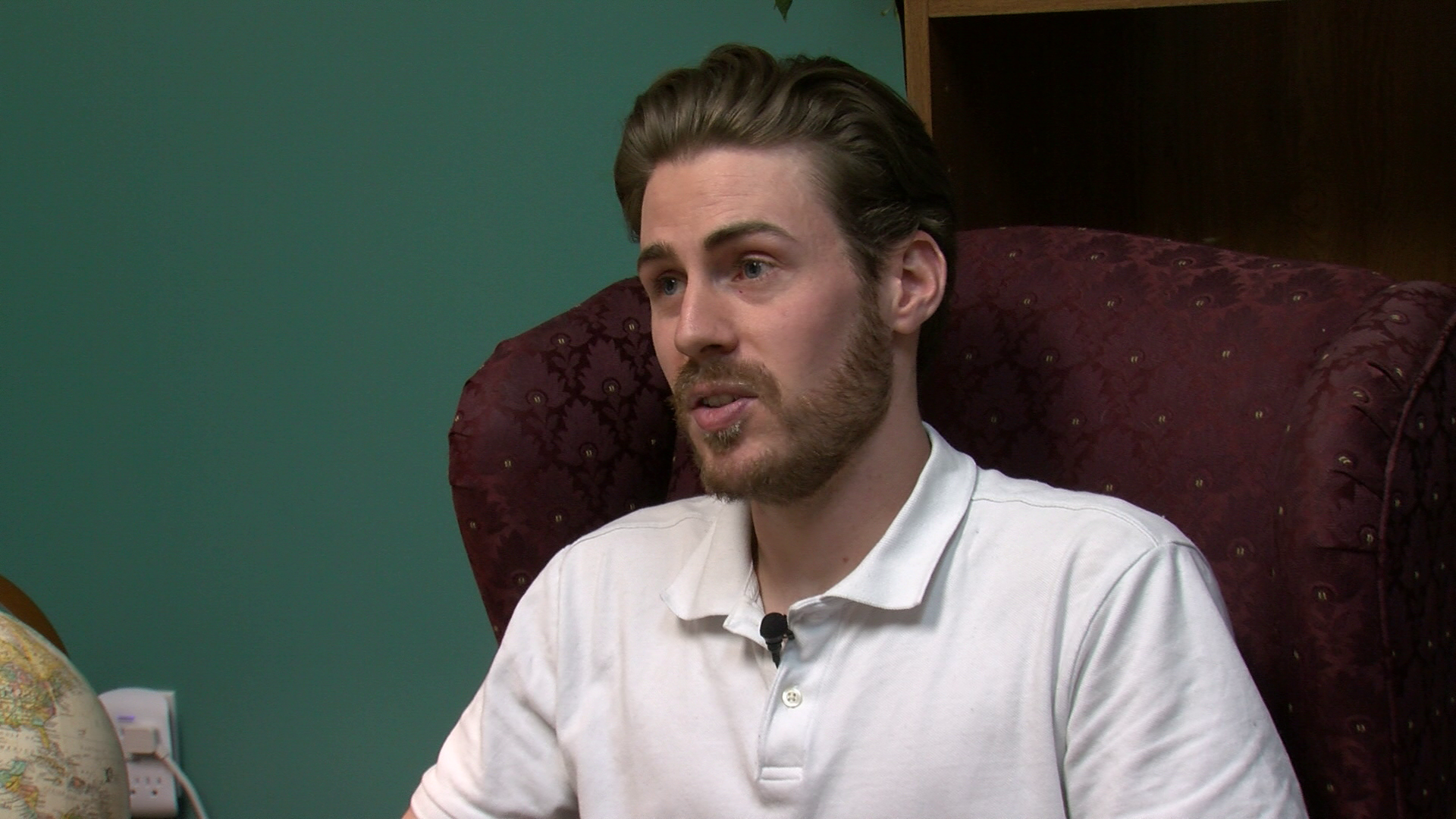
Jeremy Fonteyne, provisional psychologist at Keys to Hope Counselling Services, said that winter can be seen as a time one must “get through”.

Conditions such as depression, anxiety, or mood disorders may be worsened by weather changes, especially in the northern hemisphere.

Fonteyne said that some people love winter, while some despise it.

“Some people look forward to it. Some people absolutely despise winter. And I think both sides are very normal,” he said.

“It just kind of depends on the person. But I would say that it can be easy to fall into a trap of looking at winter as kind of like a write off,” he added.

“Like, ‘All right, we just got to survive this. We’ve just got to get through it’.”

Fonteyne said that he understands that there are many difficult aspects of winter.

Fonteyne is a provisional phychologist at Keys to Hope Counselling Services. Bob Schneider/CHAT News

He said sometimes we may need to step back and consider whether time has been taken for ourselves.

“Sometimes you can get to the point where maybe you are pushing those feelings down and you kind of feel down and you’re constantly in a state of not feeling great,” he said.

“Then you can kind of fall into this cycle of just generally feeling like things are bad just based on the season.”

Celina Symmonds, executive director at Medicine Hat Family Service, said that mental health is something that applies to everyone.

She said that community can be the answer to all problems if we access it correctly.

“I’m a big believer that community actually solves all problems,” she said.

“When we reach out to our community, we’re always amazed at the care and consideration that happens and the support that’s out there,” she added.

“I just encourage people to look around and see that there’s a ton of community here that wants to support you. You are not alone.”

Coralee Rahn, director of facility-based services with Recovery Alberta, said that there is help available and there is always hope.

“Asking for help is a sign of strength as well,” she said.

“We don’t want people to live in silence, and to suffer in silence, so there is help available and there is always hope.”

Rahn said that, for those who may not be willing to reach out to resources, to normalize mental health concerns.

“We all struggle with things throughout our life, and we know that one in four of us will have a mental health concern at some point in our life,” she said.

“We know that only half of the people actually reach out to support. So, I would really encourage people to reach out for support”

The Medicine Hat College has a student-led peer support group that offers drop-in sessions every Wednesday and Friday.

Amanda Charlton, mental health programmer at MHC, said that it’s much more beneficial for people to talk with someone who is going through the same thing.

“I think mental health is something that is very broad, and not everyone is ready to come and seek formal support,” she said.

“I think it’s a really good informal way to support students.”

Kaitlind Kelly, a MHC student who is a peer supporter in the program, said that it’s really important for students to have someone to talk to of a relatable nature.

“I find students sometimes get kind of white coat syndrome with counselors in the sense that it’s someone in a very official position.,” she said.

“They’re of a different walk of life. They might be quite a bit older. It can be intimidating.”

Kelly said that the support isn’t goal oriented and is easier for students to open up through.

Sarah Manning, another student peer supporter, said that some people may not be ready for that step to meet with a counselor.

“I think even just being somebody that they’re familiar with in a mental health situation is nice because sometimes somebody just needs a smile,” she said.

“You might have a quick conversation with them, and that honestly can just be what that person needs for that day.”

Fonteyne said that there are definitely people who do experience seasonal affective disorder.

He said that it’s a form of depression, and that they’ll experience symptoms very similar to other forms of depression.

“Fatigue, irritability, restlessness. You might lose some of the pleasure that you get from doing things that you enjoy,” he said.

“All the classic signs of depression for those people. It isn’t quite as simple as, ‘Okay, I feel down because the seasons are shifting’,” he added.

“It’s an actual process in your body that might be more complicated.”

Fonteyne said that there are some things that are in our control, and some that are not.

There are things that will happen in our bodies and brains without us realizing or understanding.

He said, however, that there are things that we can do as a result to get on top of those issues.